
In the core business of TSC, agriculture and livestock business both belong to biological industries. The company’s main niche, “land,” belongs to an immovable resource. High temperatures, droughts, and floods caused by climate change will directly impact TSC’s biological and land assets. Meanwhile, the threat of extreme weather also facilitated the consensus between the public and the governments. In order to alleviate global warming, relevant laws and regulations have been established, and this change also directly brings risks or opportunities to enterprises.
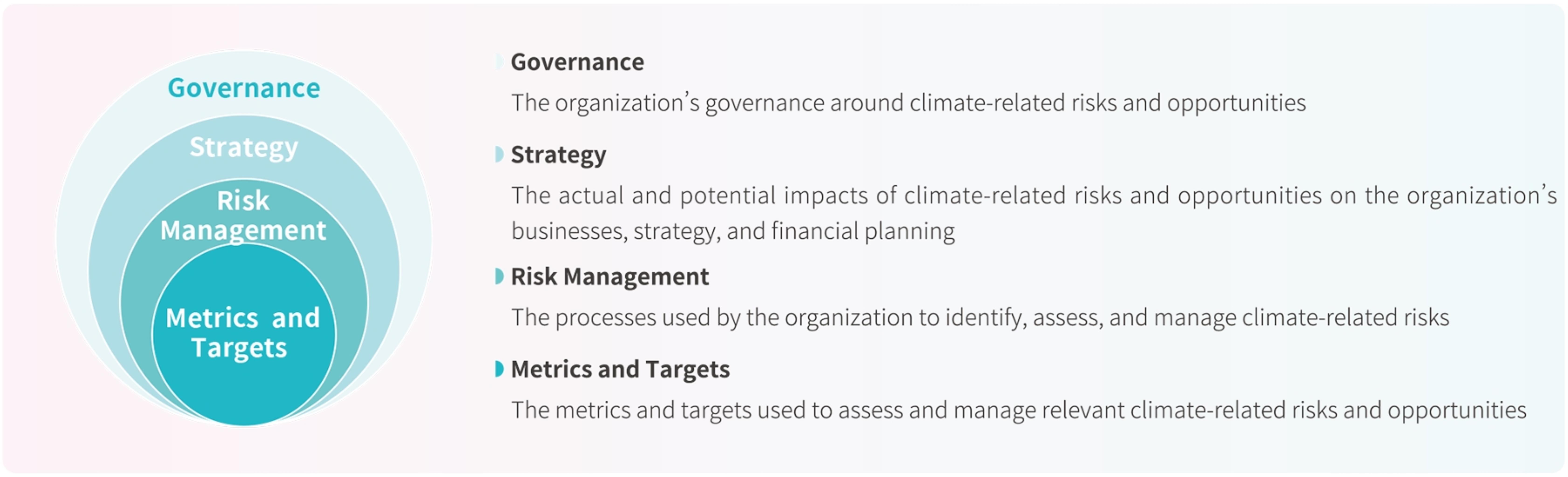
To work in line with the government’s energy transformation policy of Net Zero by 2050, TSC initiated a research project entitled Strategic Evaluation and Suggestions on the Net-Zero Transformation of Taiwan Sugar Corporation. TSC has taken the inventories of its resources of net-zero emission pathway from the perspectives of policies, regulations, and technological feasibility. In addition, we also referred to the Task Force on Climate-Related Financial Disclosures (TCFD) announced by Financial Stability Board (FSB) and the four core elements of information disclosure, namely Governance, Strategy, Risk Management, and Metrics and Targets, for the establishment of the climate change governance framework, identification of material risks and opportunities that may be caused to operations, proposals for relevant corresponding strategies, and establishment of climate-related metrics and targets that can be continuously managed.
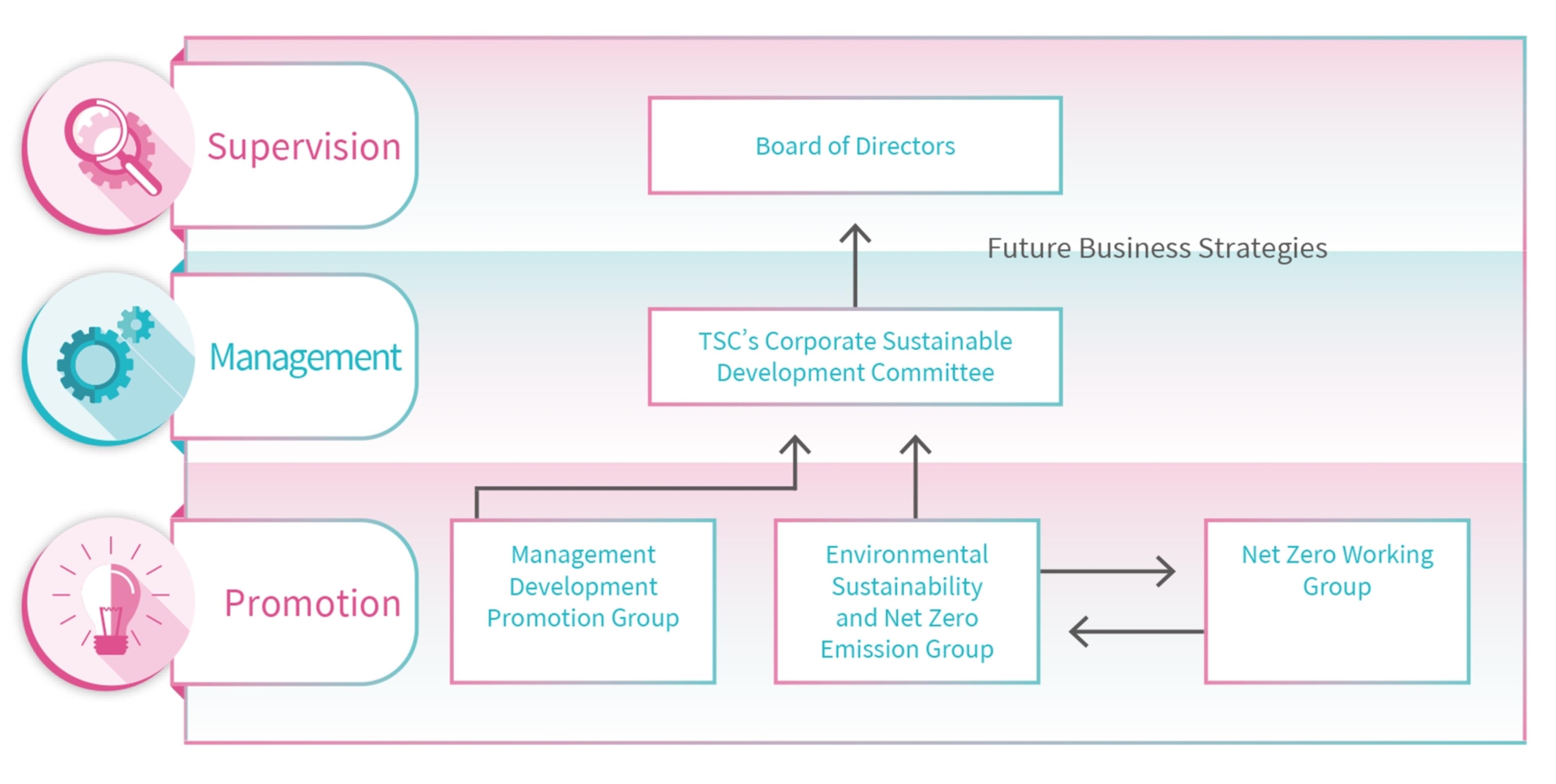
Governance Structure for Climate Change Issues
TSC has established the "Corporate Sustainable Development Committee" and the "Net Zero Working Group" to oversee and promote climate change and carbon reduction net zero related initiatives, and the assessment of climate-related risks and opportunities discussed by relevant units, as well as the proposed response strategies are submitted to the Chairman for approval annually.
The “TSC Corporate Sustainable Development Committee” has been set up to establish relevant procedural documents, with the president serving as the chairperson and the chairman as the steering member attending committee meetings on behalf of the board of directors. The committee is composed of first-level supervisors, under which establishes the Environmental Sustainability and Net Zero Task Force, whose main tasks include handling the environmental protection policy, GHG control and carbon footprint certification and the promotion and revision of relevant businesses; establishing the environmental accounting system and environmental policies of the Company and be responsible for the revision of the ESG performance indicators; assisting all district offices with the promotion of biodiversity management; assisting all units with the GHG inventory, GHG reduction and carbon footprint certification businesses; assisting all units with the setting of work plans for energy conservation, water conservation and renewable energy utilization; handling the Company’s comprehensive educational training in terms of environmental sustainability, energy conservation, renewable energy utilization, and carbon reduction; setting the Company’s schedule for net-zero, assisting all units (including district offices) with the formulation of work plans for carbon reduction and carbon sequestration offset, and implementing various execution plans.
The Net Zero Working Group is a cross-departmental task force, convened by the President, promoting the net zero carbon reduction business, conducting independent GHG inventory and review, while also handling ISO 14064-1:2018 GHG external verification, and setting carbon reduction targets and strategies based on the inventory results.
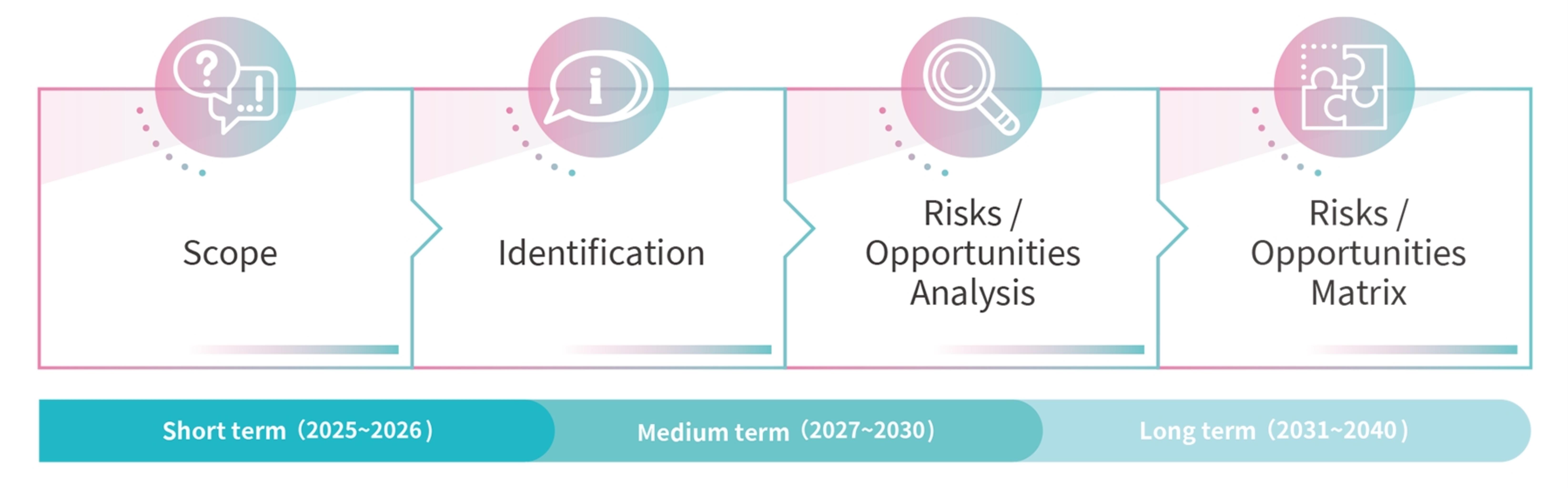
Starting from June 2024, each unit evaluated the likelihood and level of impact of climate-related risks opportunities based on its business responsibilities, and submit the evaluation results to the Department of Planning for summary; on August 8, the Department of Planning reported the evaluation results to the President and Vice President, and the identification of major risks and opportunities was completed after discussion at the meeting; on August 26, the "Results of TCFD Major Risk and Opportunity Identification and Subsequent Evaluation Briefing Meeting" was held again. Each unit were requested to formulate subsequent strategic directions and related financial assessments, and complete the overall plan by the end of 2024.
Two of TSC’s board members possess a sustainability-related background, with areas of expertise in eco-cities, eco-communities, sustainable housing and green buildings. In 2025, a total of 8 directors participated in courses organized by the Taiwan Corporate Governance Association (TCGA) and the Business Council for Sustainable Development, Taiwan (BCSD Taiwan), covering topics such as the sustainability reporting standards (IFRS-S1 and S2), circular economy benefits and sustainable finance opportunities, ESG risk response, operational practices of sustainable development committees, corporate sustainability and reporting assurance, and natural capital. The total training hours amounted to 36.5 hours.
Climate risk identification and management
TSC officially imported the framework of Task Force on Climate-related Financial Disclosures (TCFD) in 2021. In accordance with the four major aspects of governance, strategy, risk management, and indicators and goals, and with reference to the existing risk management measurement standards, the climate-related risk and opportunity assessment scale has been defined, and climate-related risk identification and assessment as well as the climate change response structure have been established.
The Department of Planning, the organizer of Business Development Promotion Group under the Corporate Sustainability Committee is responsible for convening meetings for the identification and assessment of climate-related risks and opportunities. Guidelines for Risk Assessment was referred to for the identification and assessment of the climate-related risk matrix to define risk levels. The results of the climate change risk and opportunity identification and assessment will be reviewed by the President. The annual results are submitted to the Corporate Sustainability Committee and the progress is reported at the meeting of the Net-Zero Task Force.
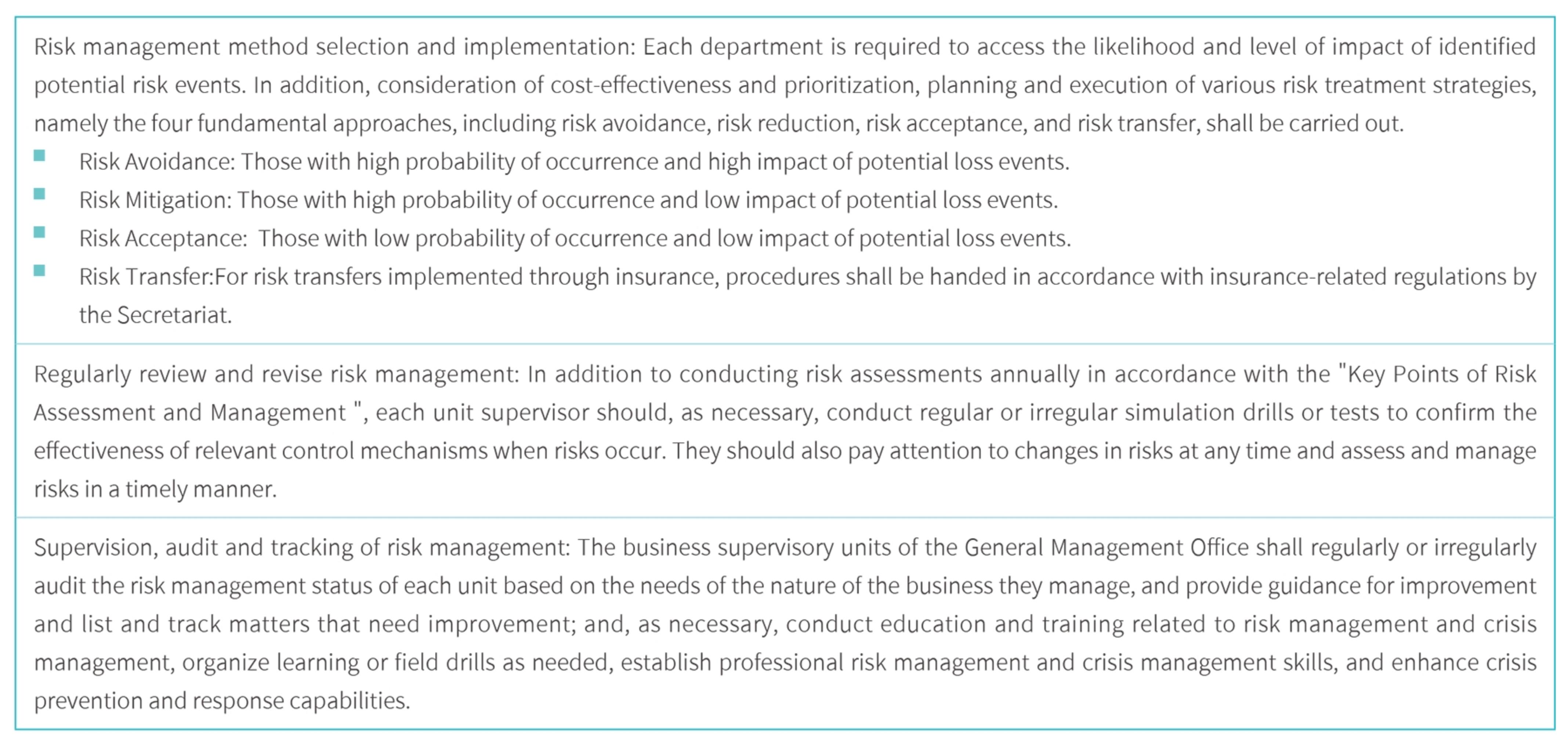
Enhance disaster risk preparedness
TSC's
Petroleum Business Division currently operates 73 gas stations. Based on a
Quantum Geographic Information System (QGIS) overlay comparison of gas station
addresses, flood potential maps published by the Water Resources Agency and the
high soil liquefaction potential maps published by the Ministry of Economic
Affairs (MOEA), and Geological Survey and Mining Management Agency
(MOEA), 22 gas stations, including Changhua Tangyou Gas Station, are located in
high soil liquefaction potential areas; and 4 gas stations, including Taitung
Zhongxing Gas Station, are located in flood-prone potential areas.
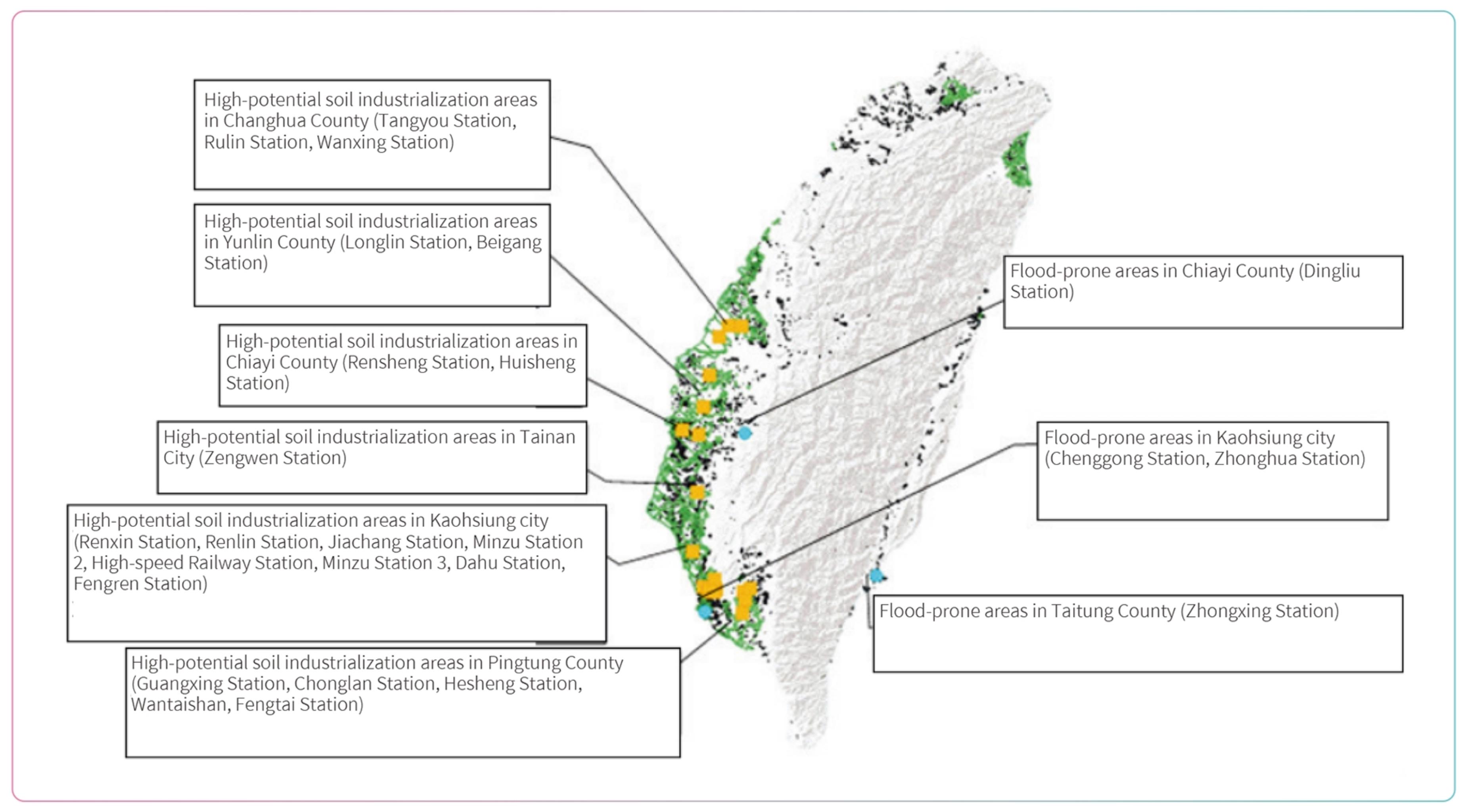
In
addition to the "Operating Guidelines for Disaster Emergency Response of
Taiwan Sugar Corporation," TSC’s Petroleum Business Division
also follows the MOEA's Energy Administration's "Gas Station Safety and
Environmental Emergency Response Manual," and has developed an
"Emergency Response Plan" and a "Heat Hazard Prevention Plan for
Outdoor Workers." We regularly conduct disaster prevention training and
emergency response drills, and inspect disaster preparedness, urging all gas
stations to implement disaster response preparedness measures. Before the rainy
and typhoon seasons, we promptly remove debris from drainage facilities and
strengthen the management and maintenance of these facilities to enhance
disaster response preparedness capabilities. We also obtain accidental damage
insurance for all assets to increase resilience to extreme weather conditions
and reduce losses from disasters and transfer the losses arising from these
risks.