Identification of Material Topics
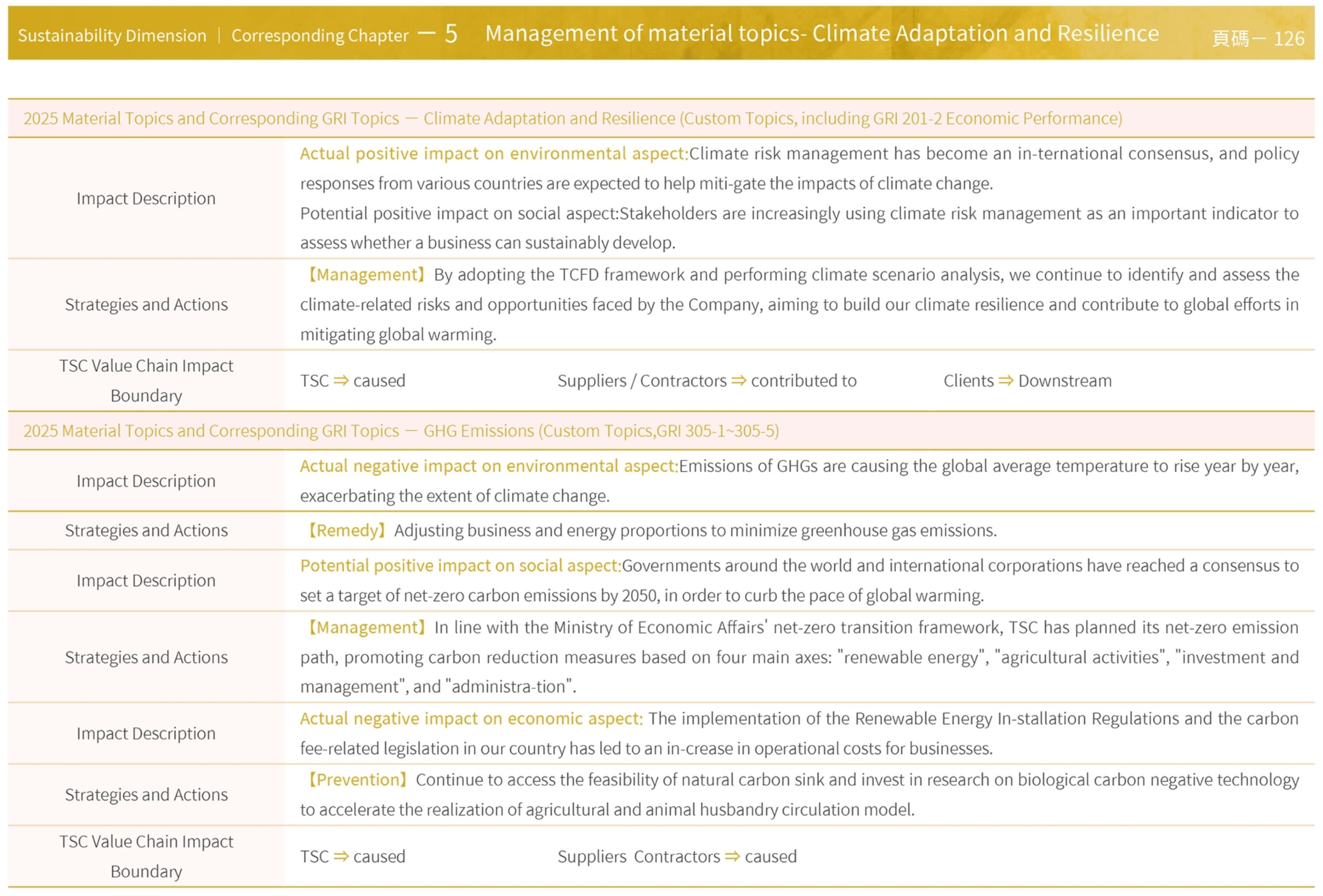
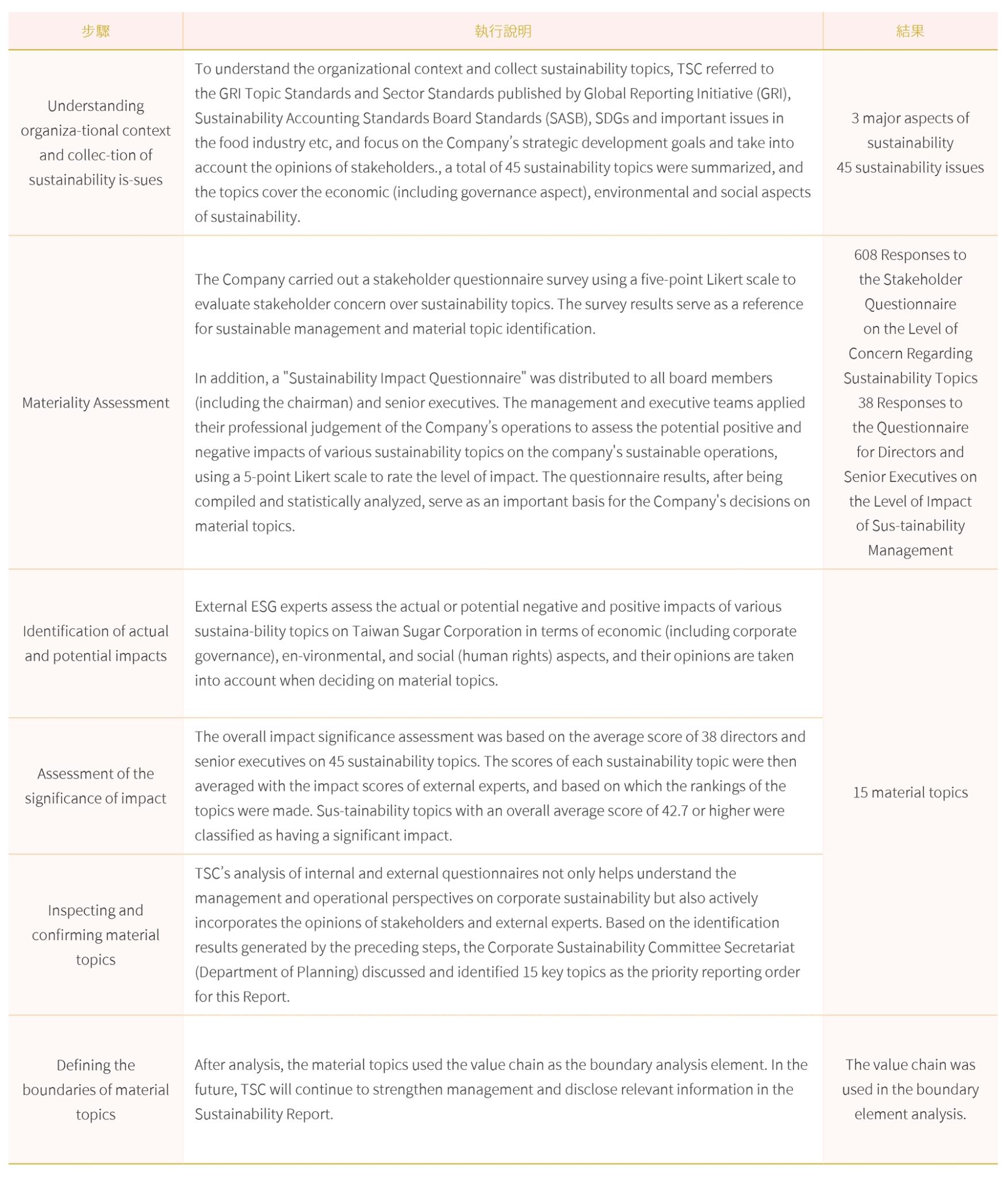
To ensure that the information disclosed in this Sustainability Report aligns better with international sustainable development trends, TSC referred to the materiality identification process of GRI Standards (2021), A sustainability materiality analysis framework is established, consisting of six steps: Understanding the organizational context, Materiality identification, Impact identification, Significance assessment, Identification of material topics, and Definition of material topic boundaries.
The Identification and Value Chain Boundary of Material Topics
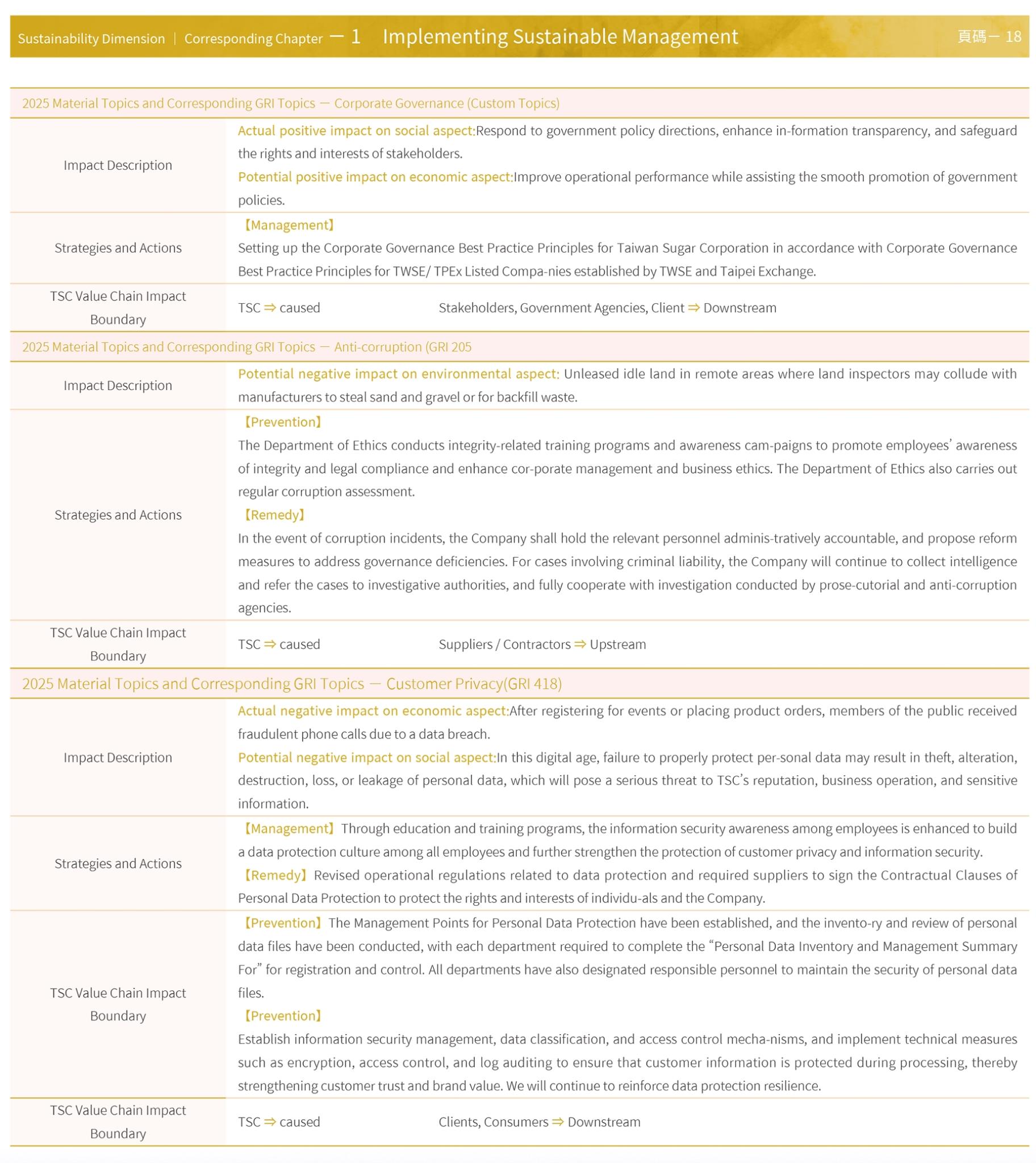
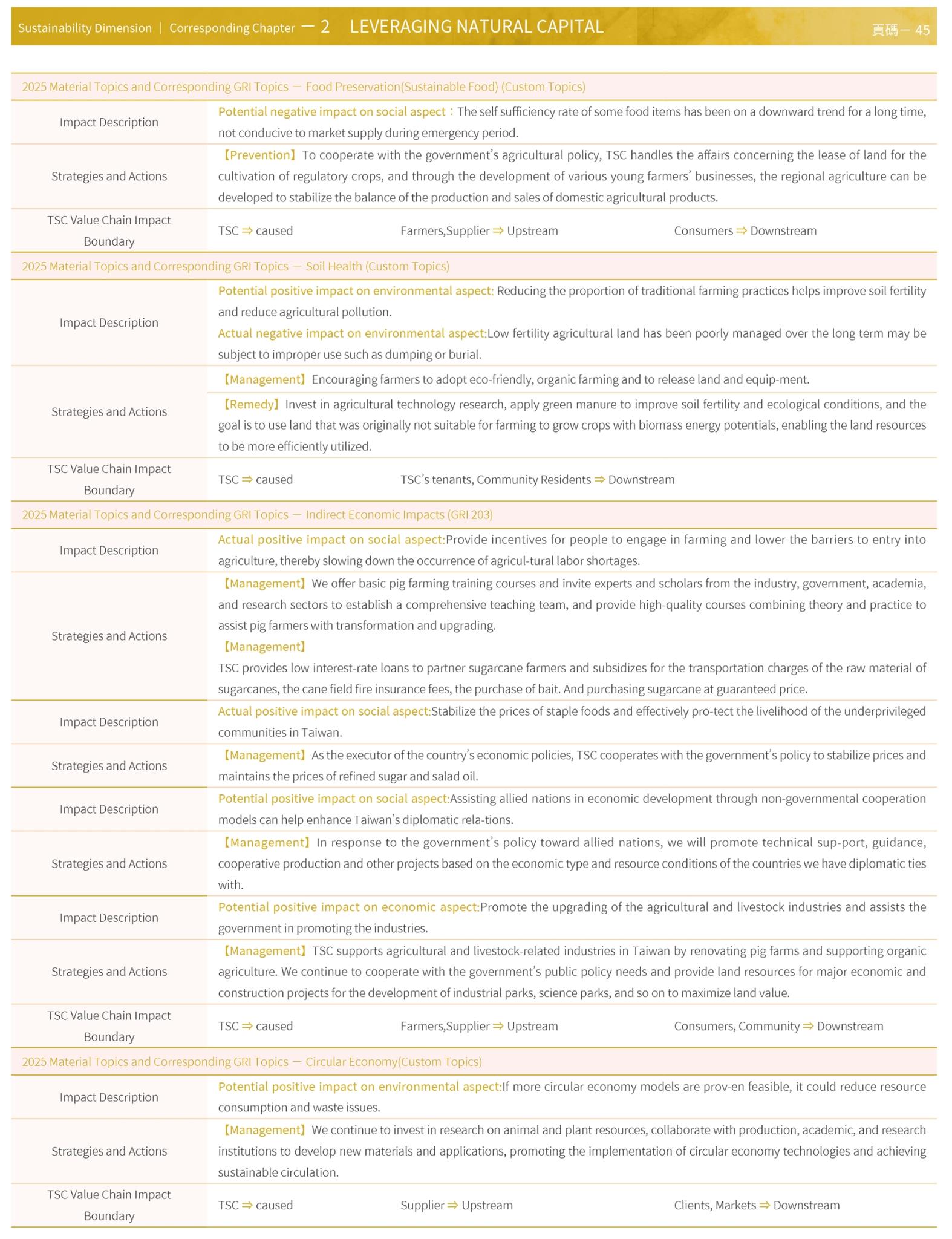
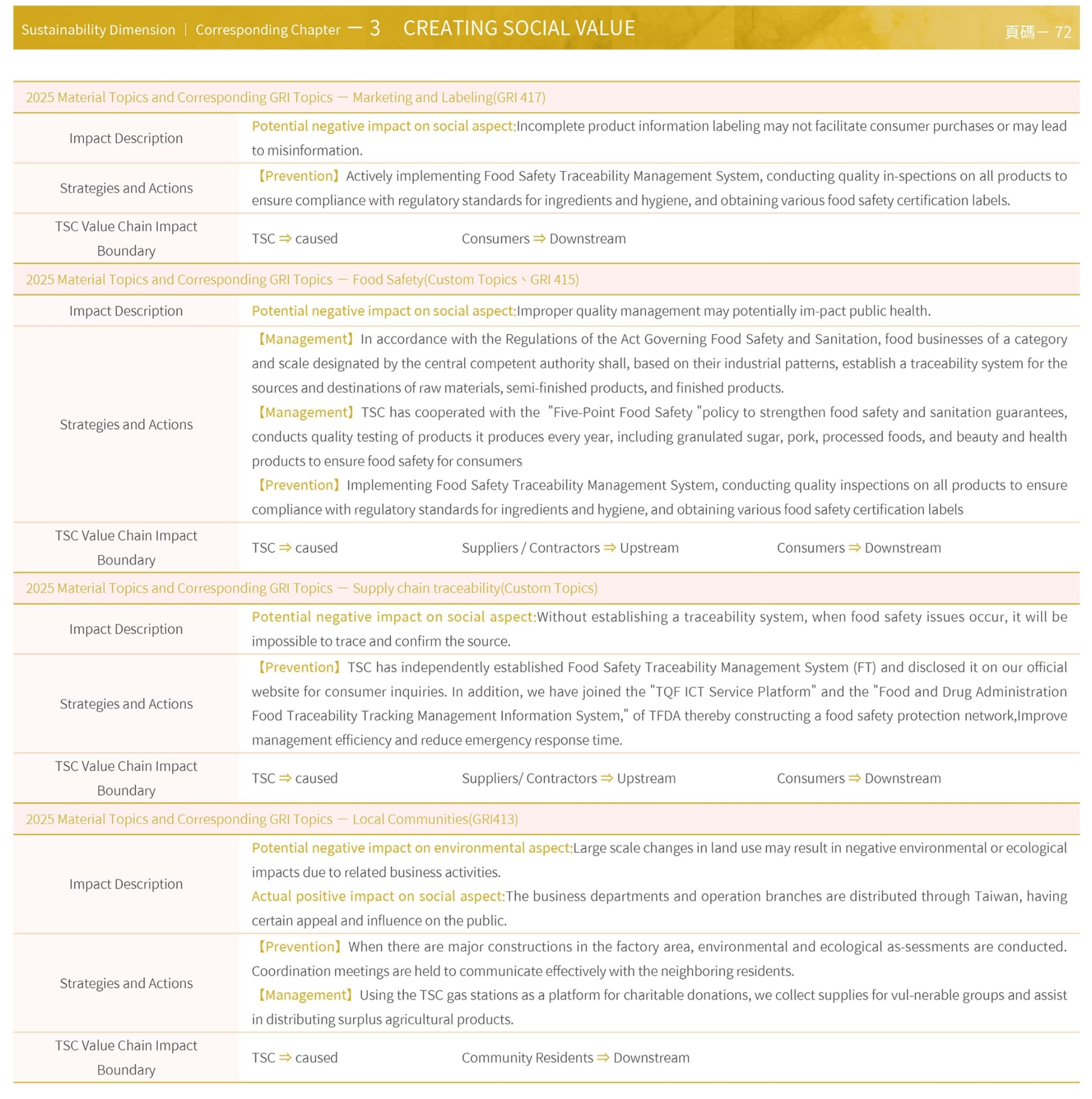
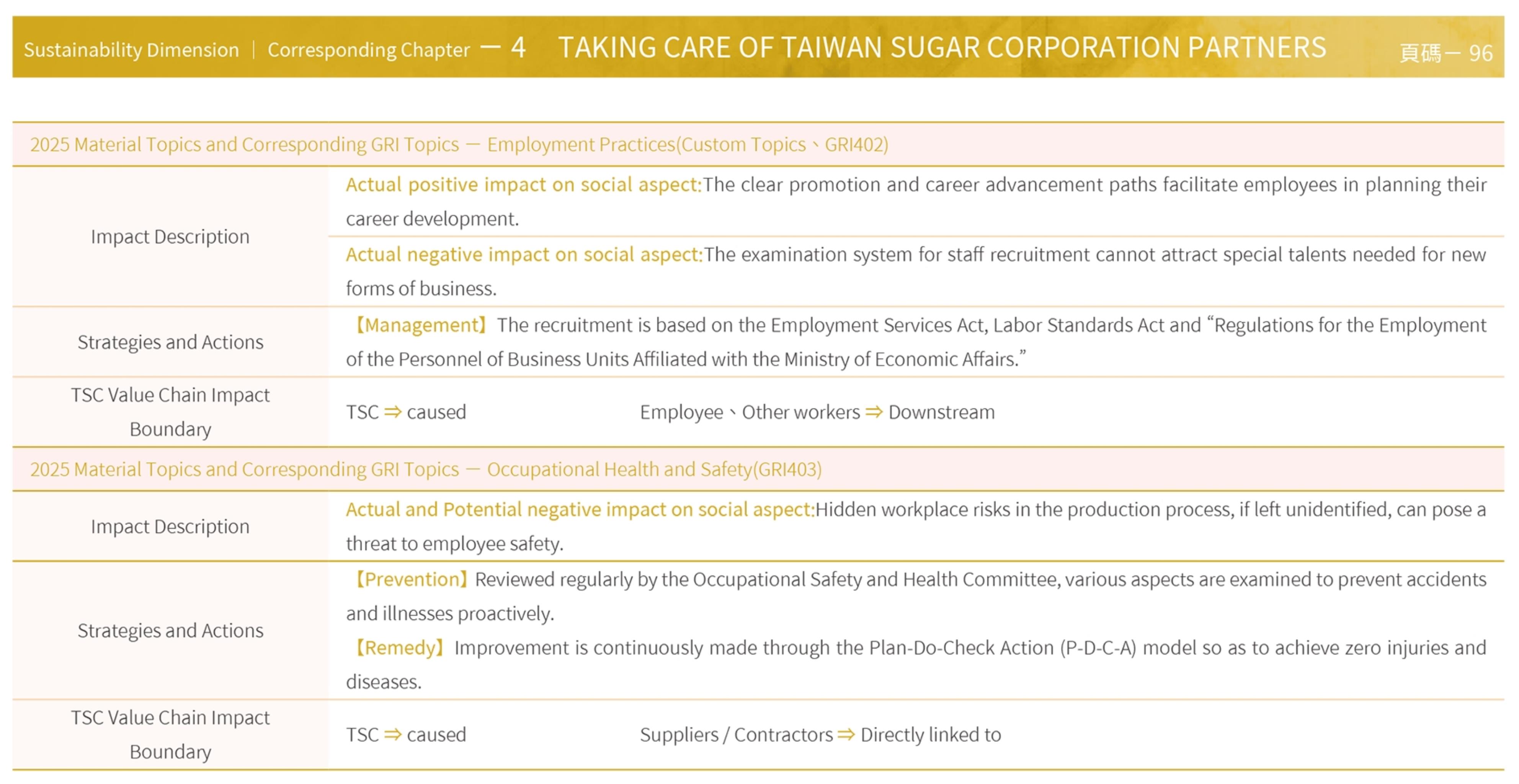
Utilization of GRI Standards and incorporation of GRI Industry Standards into sustainability topic references. Through the process of framework for the analysis of the significance of sustainability topics, a total of 15 material topics were identified this year. We adopted different methods to identify material topics in order to focus more on the management of material topics, and to take into account the limited allocation of corporate resources and manpower. Compared with the material topics of the previous year, 14 major themes are reduced.Note
Based on the material topic assessment conducted for this year’s Sustainability Report, with the value chain being used as the element for the boundary analysis, we have summarized the contents in five chapters that include “Implementing sustainable management,” “Leveraging natural capital,” “Creating social value,” “Taking care of taiwan sugar corporation partners,” and “Building climate resilience,” explaining TSC’s active management in the aspects of economy, product liability, environment, social participation, human rights, and employee care. TSC will continue to strengthen sustainable management and disclose relevant information in the corporate sustainability report.
Note: Compared with the material topics of the previous year, the material topics that decreased in the current year are as follows: Water and Effluents, Energy, Animal Health and Welfare, Social Engagement, Supplier Environmental Assessment, Supplier Social Assessment, Natural Ecosystem Conversion, Air pollutant emissions, Waste, Pesticides use, Employee Diversity and Equal Opportunity, Freedom of Association and Collective Bargaining, Forced or Compulsory Labor and Land and Resource Rights, with a total of 14 topics.
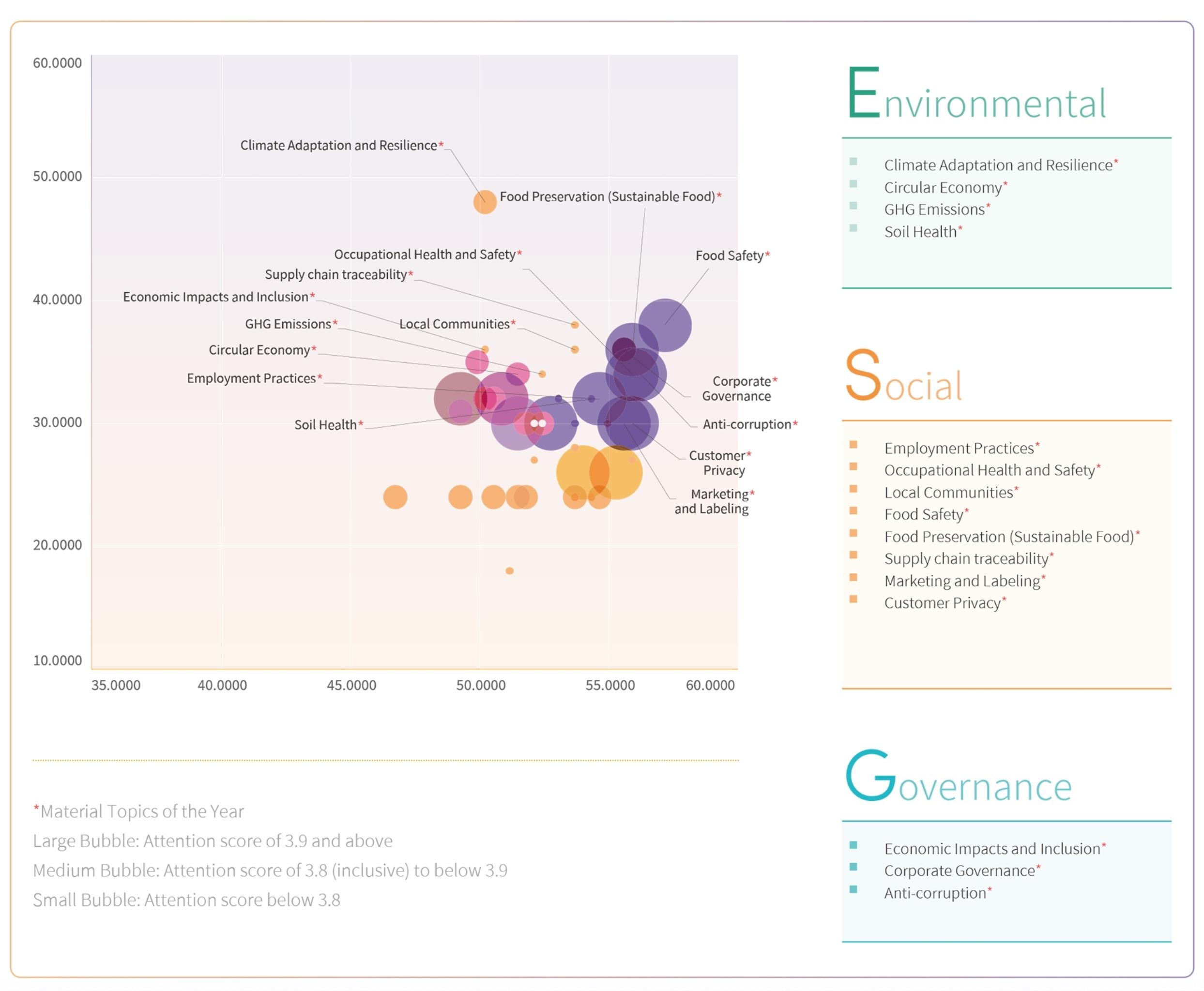
After analysis of the material topics in the 2025 Sustainability Report and with the value chain being used as the element for the boundary analysis, from upstream (e.g., suppliers/contractors) and Taiwan Sugar Corporation itself through to downstream (e.g., customers), we have summarized the contents in five chapters that include “Implementing sustainable management,” “Leveraging natural capital,” “Creating social value,” “Taking care of taiwan sugar corporation partners,” and “Building climate resilience,” explaining TSC’s active management in the aspects of economy, product liability, environment, social participation, human rights, and employee care. TSC will continue to strengthen sustainable management and disclose relevant information in the corporate sustainability report.