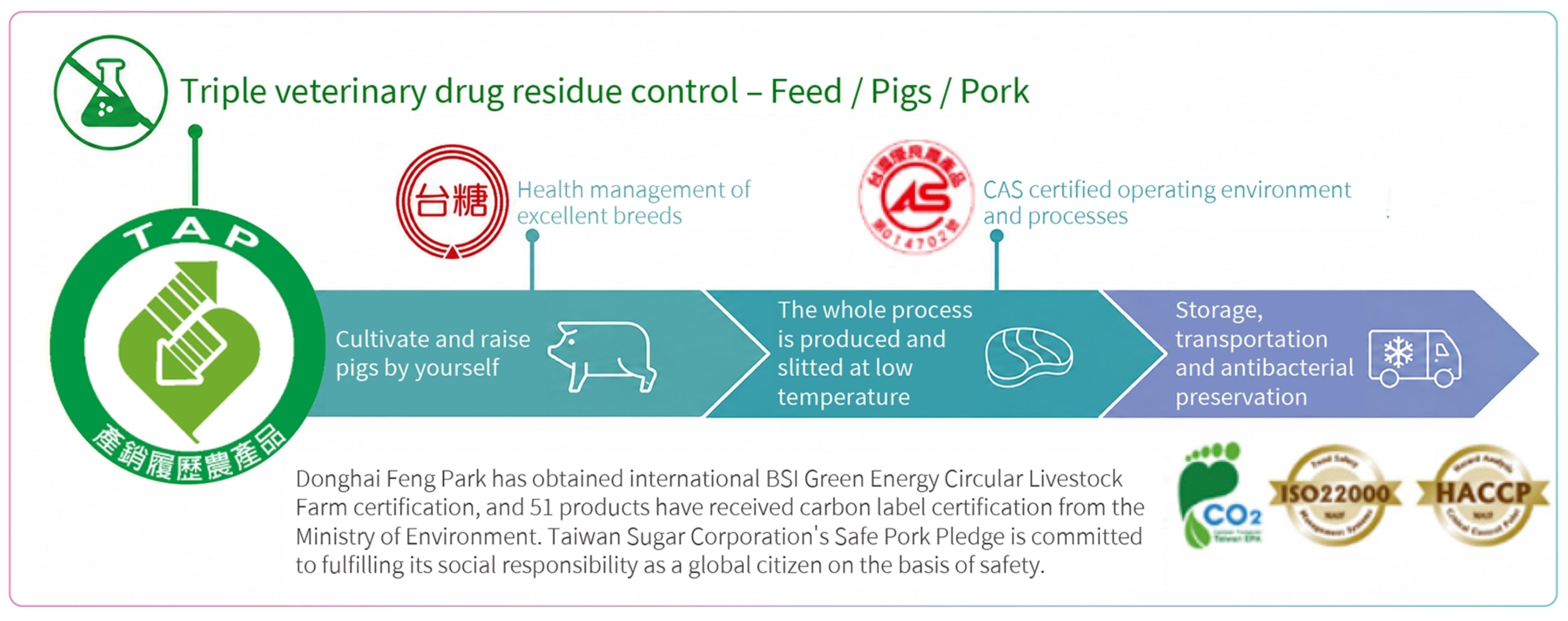
Animal welfare is closely linked to food safety and the risk of disease outbreaks. TSC manages pig breeding in accordance with the Ministry of Agriculture’s Animal Industry Act and the "Key Points for Pig Farm Production Management Operations" of the internal control system, and complies with the regulations on the transport, loading and unloading, and slaughter of animals and aquatic animals. The HACCP management system is implemented to eliminate food hazard risks. After hazard analysis (including biological, physical, and chemical) of each process step from raw material acceptance to shipping, effective control measures and conditions are established to prevent, eliminate, or reduce food hazards to an acceptable level. There were no violations of laws and regulations in 2025 and voluntary standards were complied with.
TSC ensures the stability of pork quality, texture, and flavor through a sound and comprehensive pig breeding system, feeding management, and feed nutrition. We are also willing to share pig-raising experience and encourage more young farmers to invest in it, so as to enhance the competitiveness of Taiwan’s pig farming industry.
Pig-friendly Rearing
The Renovation Project of Agricultural Circulation Pig Farms is not only a good solution to turn pig farming industry into an eco-friendly one, but also a global trend to improve animal welfare. The use of negative-pressure water curtain in the pig housing provides comfortable and pollution-free environment for pigs. The adoption of smart management and automated feeding system significantly improves farming efficiency while enabling real-time health monitoring, creating a win-win-win situation for pigs, TSC, and consumers.
The design and spatial layout of the pig housing comply with EU animal welfare and animal-friendly farming regulations. The pigs are castrated within 7 days of birth. There are toys in the pig house for the pigs to play with. In the planning of new pig house, the sows will only be kept in a narrow pen for one month from artificial mating for the observation of whether they are pregnant. The dimensions of the sow stalls are designed in accordance with the Guidelines for Animal-friendly Husbandry issued by the Ministry of Agriculture (1.64 square meters of activity space per sow). The farrowing pen (not a narrow pen) is also designed to be compliant with the animal-friendly guidelines (6 m2 of activity space per sow) for the sows to have sufficient space for movement, creating a friendly environment for delivery and lactation. The design of the hog house is compliant with the EU regulations with the activity space of 1 m2 per head.
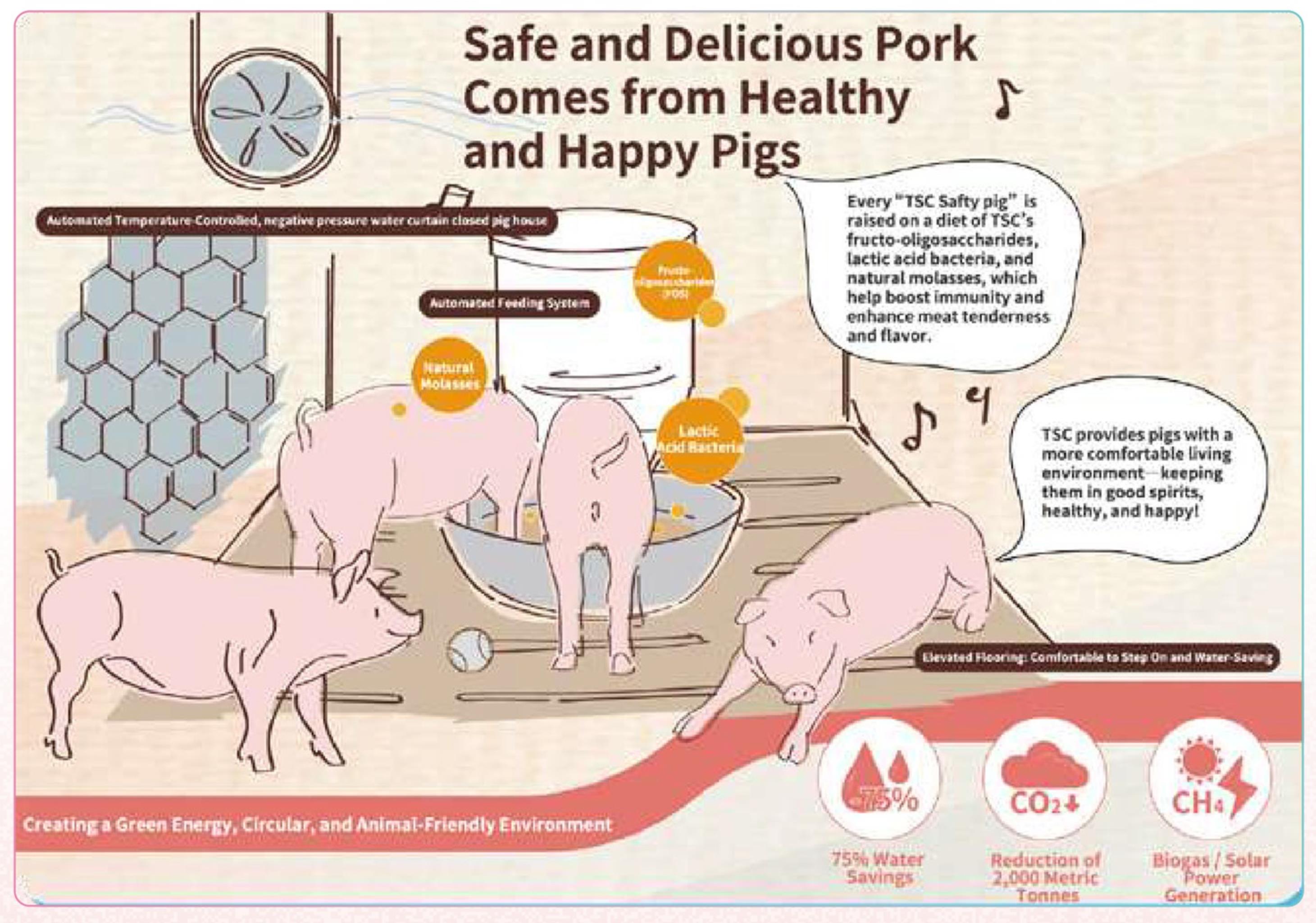
TSC’s Livestock Business Division operates pig farming business based on five core principles: genetic optimization in breeding, industrial-scale farming, scientific disease prevention, environmentally friendly and park-like environments, and humane animal welfare practices. In addition to feeding the pigs with self-produced "green feed" (self-produced feed without antibiotics and added with fructooligosaccharides (FOS), natural molasses and lactic acid bacteria) to maintain intestinal health and enhance immunity to reduce the risk of disease, we also develop precise nutritional feed formulas based on the nutritional requirements of pigs at different growth stages to improve production efficiency.
TSC's meat products come from pigs raised in pig farms with carbon reduction goals, and comply with CAS, ISO2200 (including) HACCP certification operating procedures, and have obtained Traceable Agricultural Product (TAP) certification and 51 product carbon footprint labels. In the future, TSC is also actively planning to apply for carbon reduction labels and pork exports to expand the international market.