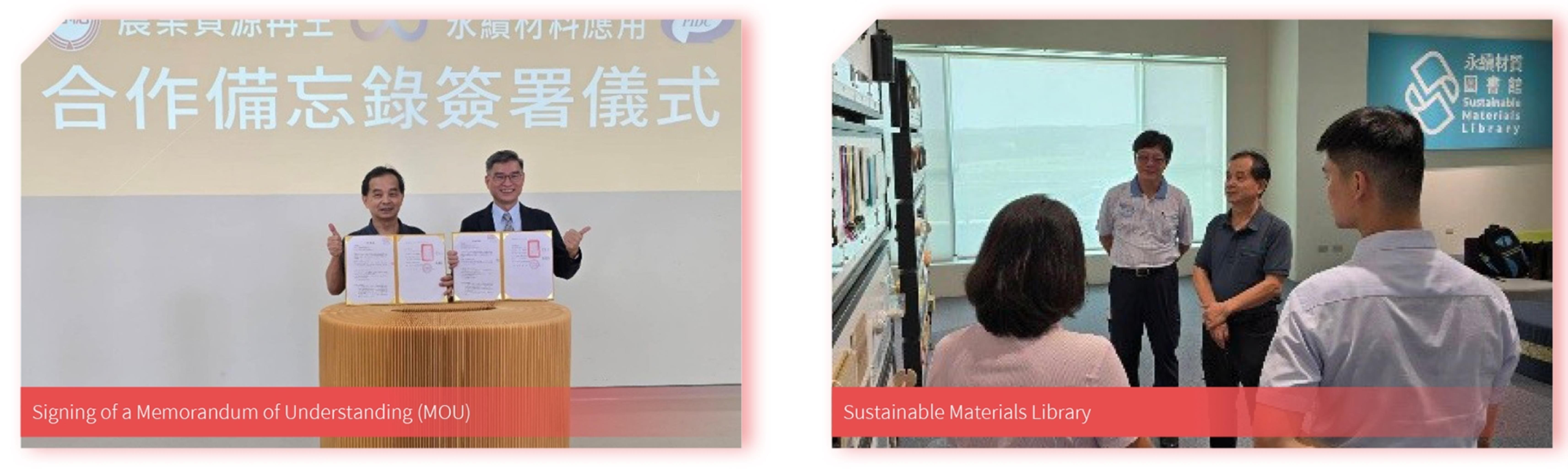
On
October 7, 2025, TSC and Plastics Industry Development Center (PIDC) signed a
Memorandum of Understanding (MOU), which symbolizes the formal integration of
TSC's long-standing experience in "agricultural recycling" with PIDC's
expertise in "industrial recycling" in material innovation and
recycling applications, opening a new chapter of cross-industry co-creation for
sustainable resource utilization.
TSC
has practiced circular economy thinking since the sugar-making era, from
fermenting bagasse into fertilizer and returning filter mud to fields to
improve soil, to promoting biogas power generation and the Oyster Shell
Biological Material Plant in recent years, all demonstrating the spirit of
"turning surplus into resources and creating value from waste". PIDC,
on the other hand, uses its "Sustainable Materials Library" platform
to bring together energy in materials innovation, recycling, and green design.
This collaboration will connect TSC's agricultural by-products and materials
R&D platform, enabling idle resources to be transformed into green
materials and innovative products.
In
recent years, TSRI has also actively reviewed its available resources to
develop several circular products with market potential, including "fragrance
board" based on bagasse, "eco-friendly cat litter" made from
waste fiber powder and biodegradable materials, and "pet dry grooming
products" developed from sugarcane fiber powder. Currently, TSC has
representative materials such as orchid extract, pig bile powder, and bagasse
on display at PIDC 's "Sustainable Materials Library." In the future,
the platform will facilitate collaborations with more manufacturers to promote
green innovations from the laboratory to market applications.
Following
the signing of the MOU, TSRI and PIDC visited the TSC Tainan District Office to
conduct an on-site inventory of reusable idle resources. Among these resources,
old wood is expected to be combined with recycled materials to be transformed
into commemorative items for Taiwan Sugar's 80th anniversary, showcasing the
integration of resource reuse and corporate history. The two parties also
further explored developing eco-friendly products using agricultural waste from
TSC as raw materials. It is hoped that these materials can replace some of the
plastic materials used in orchid clips and wire, offering benefits in terms of
plastic reduction, practicality, and sustainability.
This
collaboration is not only an important action by TSC to promote the circular
economy and net-zero carbon reduction, but also demonstrates the possibility of
cross-industry technology sharing and redefining the value of resources.
Through the reuse of agricultural by-products, the development of sustainable
materials, and the matching of industry platforms, TSC and PIDC will jointly
realize the sustainable vision of "turning waste into resources and
collaborating to create a circular economy".