With its clear vision of “Becoming a benchmark enterprise in health and green industries in Asia-Pacific Region”, TSC invested in the development of renewable energy very early on and has been increasing the area of solar energy installations year by year, the Company is actively utilizing biogas and biomass power generation to reduce its need for externally purchased electricity in response to "Taiwan's Pathway to Net-Zero Emissions in 2050". Statistics show that TSC produced 4,438 Renewable Energy Certificates (RECs) in 2025, all acquired by domestic companies. The number of RECs produced is projected to increase significantly in 2026.
Green Energy Autonomy
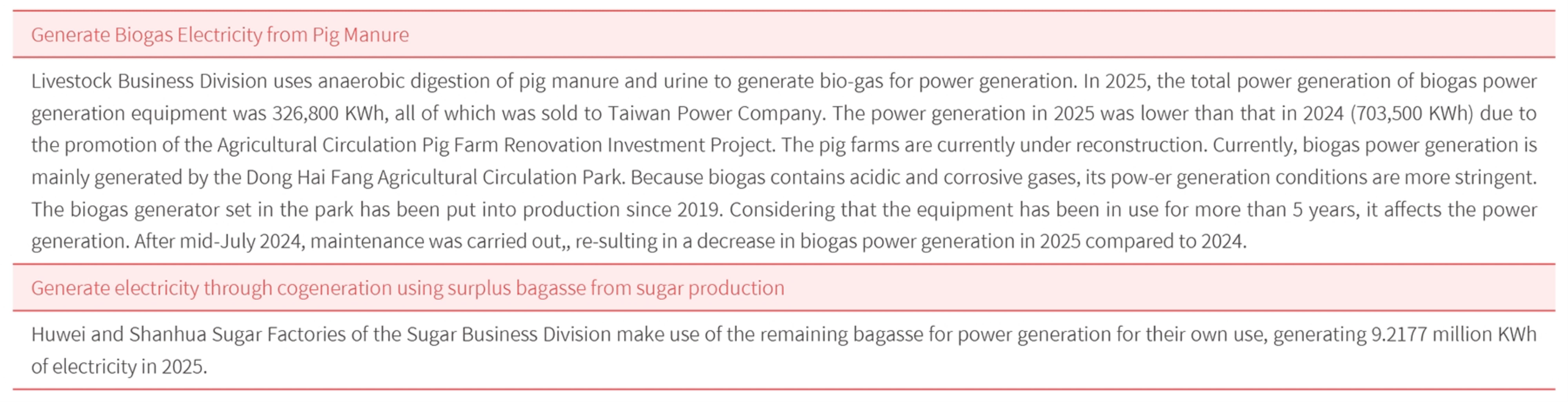
Driven by the long-standing commitment to circular resource use, TSC began investing in agricultural waste resource power generation many years ago, including sugarcane bagasse cogeneration and pig manure and urine biogas power generation. The total power generation in 2025 reached 9,544,500 KWh, which is equivalent to reducing Category 2 GHG emissions by approximately 4,516.51 metric tonnes of CO2e (the GHG emission coefficient referred to the 2024 electricity carbon emission coefficient announced by the Energy Administration of the Ministry of Economic Affairs at 0.474 kgCO2e/KWh). This not only aligns with the government's circular economy policy direction, but also serves as a model for transition within the agricultural and livestock sectors, positioning TSC as an industry leader.
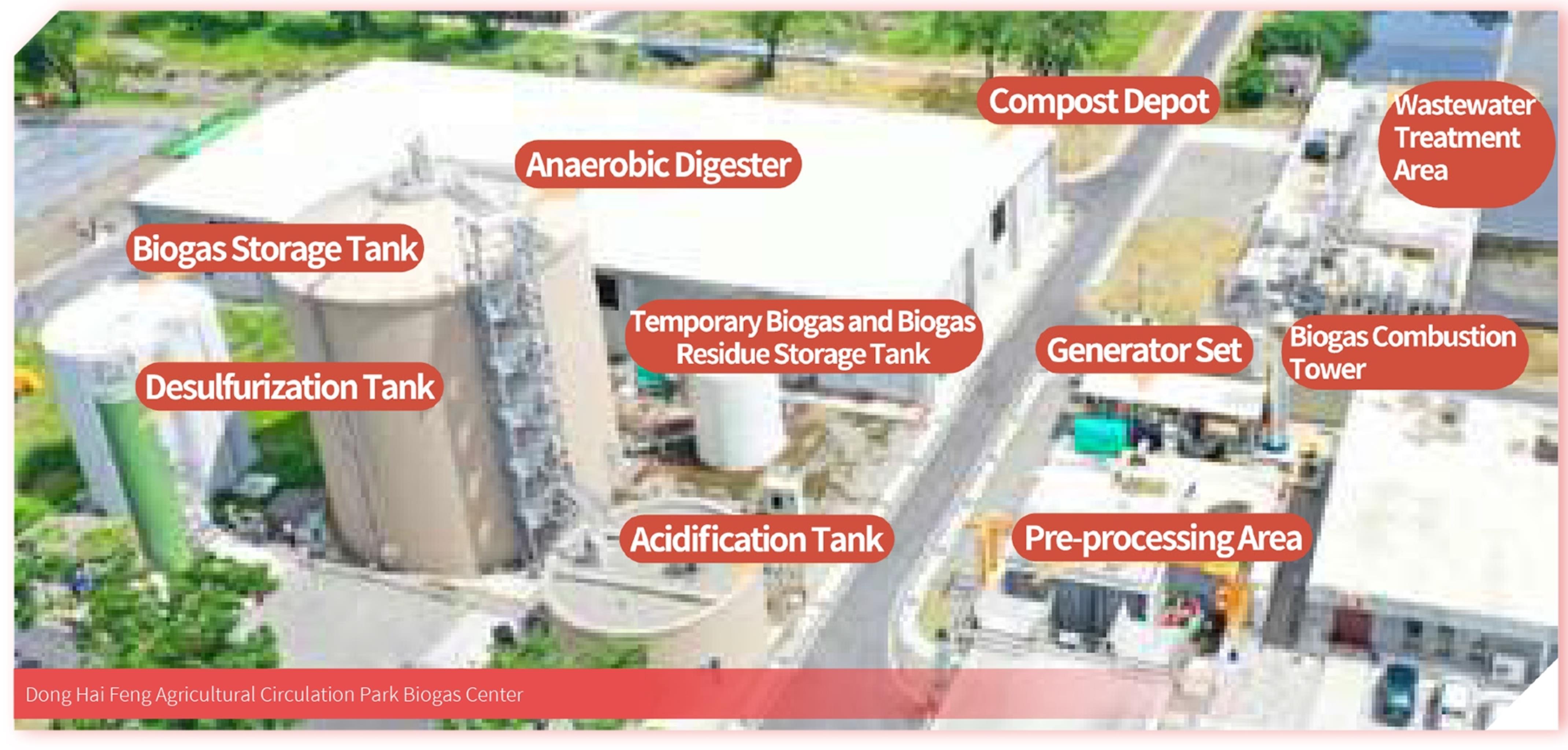
TSC has been developing biogas utilization technology since 2012, using biogas produced by anaerobic digestion of pig manure and urine for electricity generation. In 2018, it became the first domestic certified supper of biomass-based renewable energy certificates (RECs) in Taiwan. The subsequent pig farm renovation plan will further increase the capacity of biogas power generation and solar power generation.
Although bagasse is recognized as biomass energy abroad, the bagasse was classified as industrial waste in the early days domestically, making the bagasse boiler cogeneration system installed by the Sugar Business Division in the early years not able to meet the conditions stipulated in the "Regulations for Installation and Management of Renewable Energy Generation Equipment" that the device "may be recognized as renewable energy power generation equipment before installation", and thus missed the opportunity for green power application. Starting from 2023, under the guidance of ITRI and consulting companies, Huwei Sugar Factory overcame various challenges in the application, and after continuous communication and data optimization with the Energy Administration and the National Renewable Energy Certification Center, it finally passed the review of the National Renewable Energy Certification Center in June 2024 and officially obtained the green energy certificate. The average power generation of Huwei Sugar Factory during the construction period was about 7 million KWh, which is equivalent to obtaining 7,000 renewable energy certificates, building on this success, TSC further obtained "Report of Renewable Energy Generation Equipment Inspection" for its Shanhua and Huwei sugar refineries in 2025. During the operation period, each refinery could obtain one REC for every 1,000 kilowatt-hours of self-generated electricity, which can be sold on the green energy certificate trading (T-REC) platform, contributing to the Company's green energy revenue. A total of 4,438 RECs were obtained during the operation period in 2025, marking a significant step in the energy transition for the Sugar Business Division.
Alignment with solar energy policies
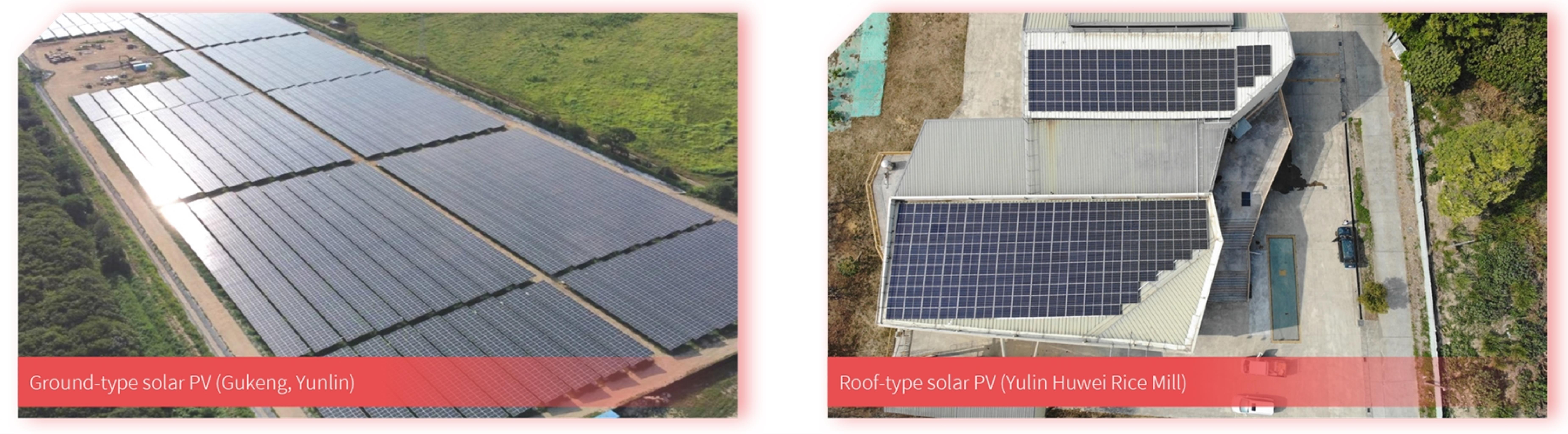
TSC actively cooperated with the government’s energy transition policy and made use of the Company’s existing land resources to promote the construction of “solar PV systems”. The rooftops of buildings, unsuitable land for cultivation, idle land in closed factories and detention ponds will be leased to solar energy developers through tender procedures. These areas are used for the installation of rooftop, ground-mounted, and floating solar PV systems to enhance spatial utility. In particular, for the rooftop and small-scale land-based systems, developers are responsible for the installation and maintenance of the PV facilities, which are then leased to TSC to accelerate the development process. In 2025, the total land area leased by TSC to solar photovoltaic operators has reached 625.52 hectares.
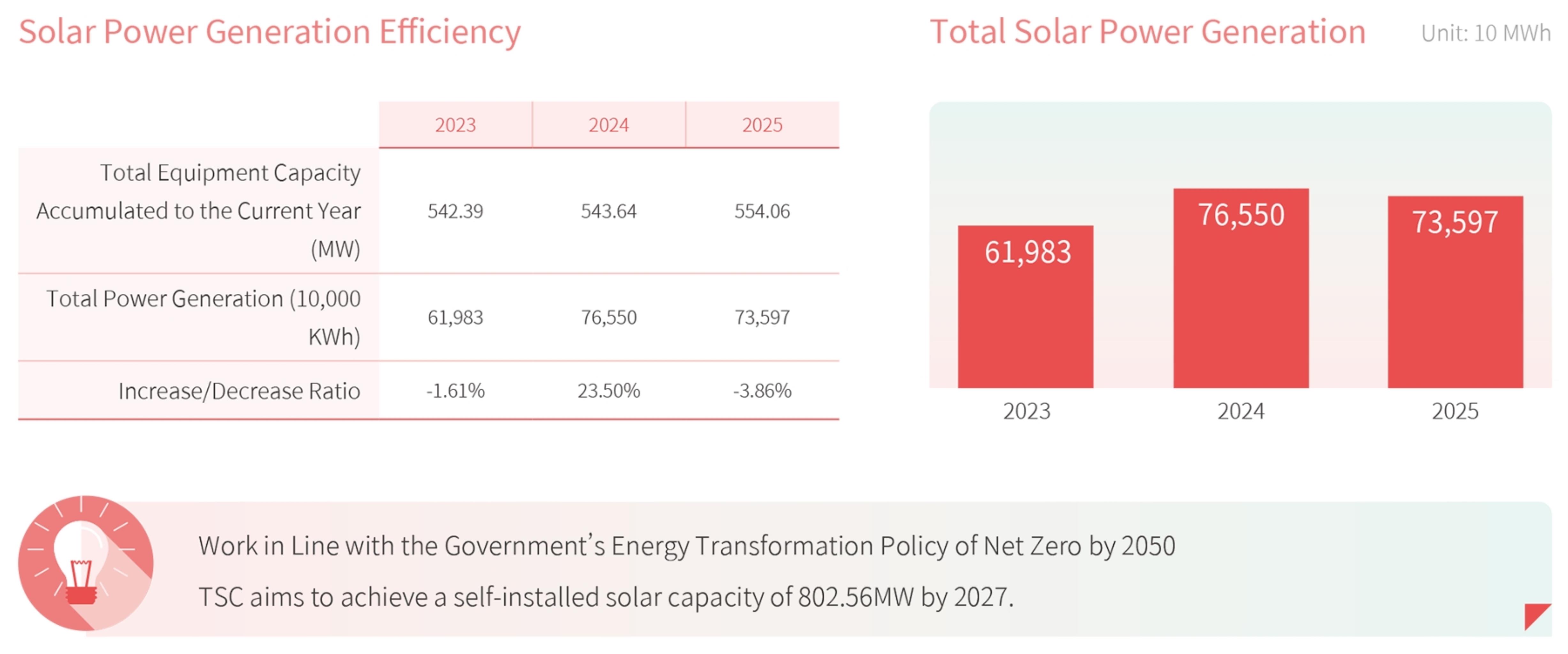
In terms of installed power generation capacity, a total of 554.06MW of solar photovoltaic (PV) facilities have been completed by 2025, including 17.51MW of rooftop type system, 99.95MW of floating PV system on detention ponds and 436.60MW of ground-mounted PV (including installations on non-arable land); it is estimated that the total new capacity in 2025 will amount to 8.48MW (subject to adjustment based on actual situation). In the future, Taiwan Sugar Corporation will continue to actively deploy and cooperate with the national green energy policy to gradually expand the substantial contribution of renewable energy.