According
to the Aqueduct Water Risk Atlas of the World Resources Institute, all areas in
Taiwan belong to Low – Medium (1-2). All the TSC operating bases are not set up
in national or international protection areas, and the water intake is from the
legal water resources authorized by the government, having no significant
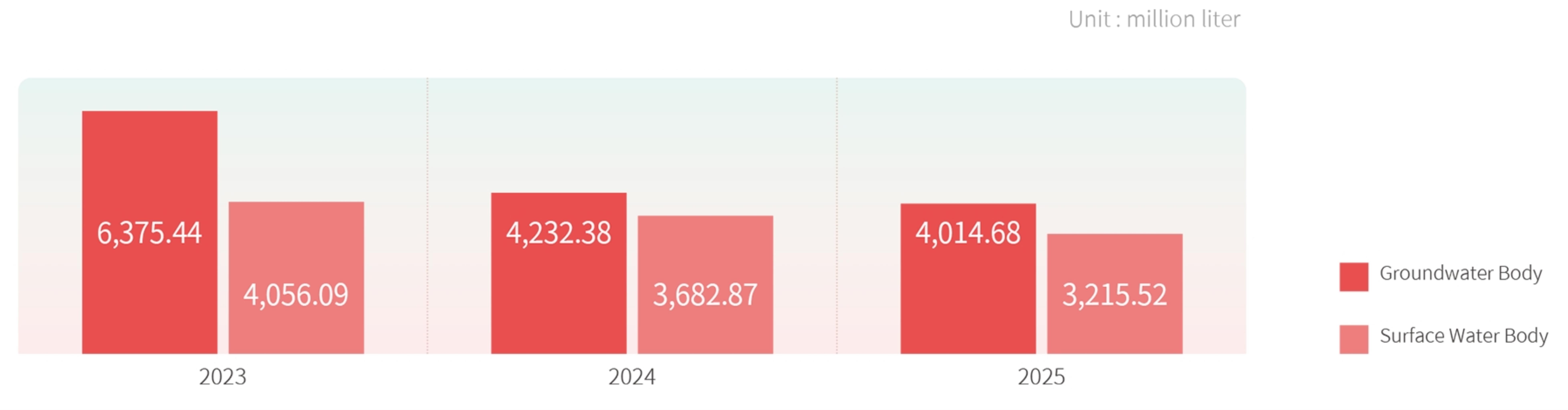
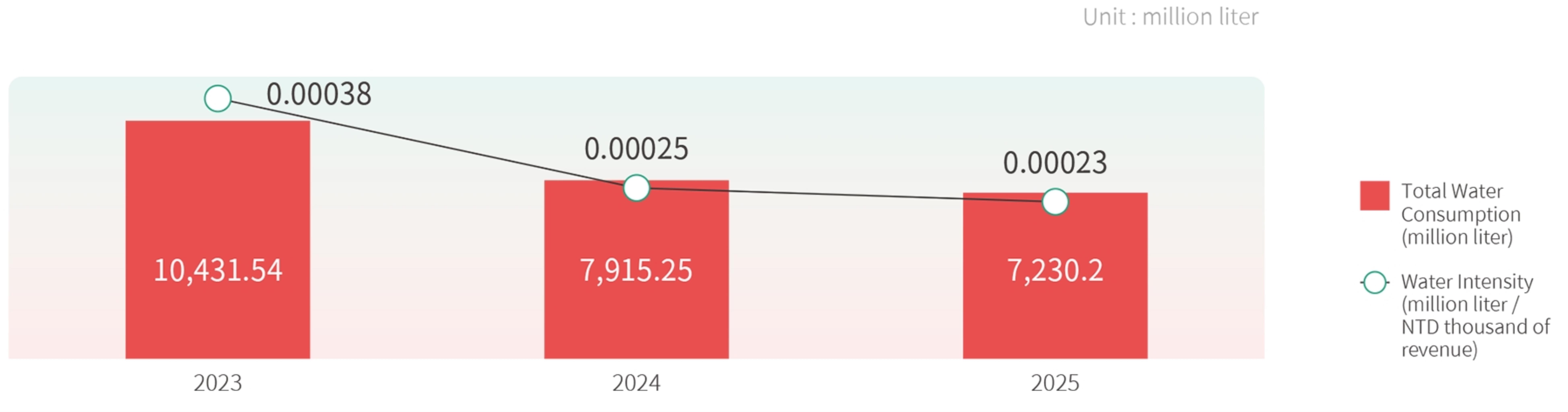
influence on water resources. In 2025, the amount of water intake was 7,230.2million
liters, a 8.65% decrease compared with 2023(7,915.25 million liters), and the
water intensity decrease 28.57% compared with the previous year, the main reason is that the water intake has
decreased due to the lease of Dafu Farm of Huatung Operation Branch.
TSC
is dedicated to the improvement of water management and wastewater recovery,
proper use of water resources, reduction of wastewater discharge and enhanced
water conservation effectiveness. The consumption of water of 2025 was 5,523.03
million liters.
Wastewater Discharge
TSC's
business units that generate waste water all have relevant wastewater treatment
procedures and obtain the water pollution prevention and control permits.
Qualified testing agencies are entrusted to take samples for analysis on a
regular basis, and the declaration of the inspection is also conducted on the
website designated by the MOENV. The effluents are discharged to the sewage
system or approved water bodies legally, and the quality of discharged water is
in compliance with the discharge water standards stipulated in laws and
regulations for the industry. Wastewater is finally discharged into the sea and
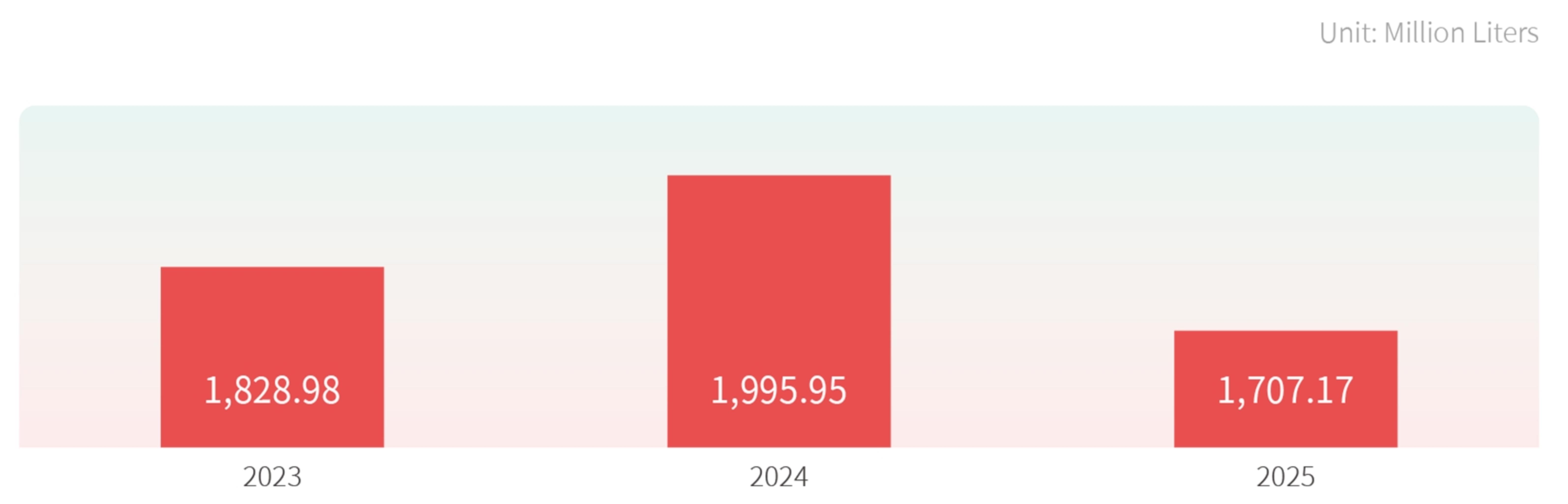
does not have major impacts on the water sources. The amount of discharged
wastewater in 2025 was 1,707.17 million litters, a decrease of 14.77% compared
with 2024, this is mainly due to the reduction in the number of pigs at
Livestock Business Division's Wanxing and Huwei farms, as well as the reduction
in wastewater discharge at Nanshalun Livestock Farm due to the opening of new
livestock sheds and the implementation of separate stormwater and sewage
systems.
To improve the
operating efficiency of the pig farming business and lower the environmental
impact on the local communities, after the construction of the Dong Hai Feng
Agricultural Circulation Park, TSC continues to implement the investment
project of Renovation Plan of Agricultural Circulation Pig Farms, turning
traditional pig housing into modern livestock park with deodorization system
and sewage treatment system. In 2025, the Livestock Business Division has
conducted the reuse of wastewater in the pig farms, the recovered and reuse
amount of wastewater in the 11 pig farms (Wanxing, Huwei, Douliu , Haipu,
Shanhua, Nan Shalun , Shilin Er, Da Xiang Yi Chang, Da Xiang Er Chang and Dong
Hai Feng) totaled 397,389 metric tonnes.
TSC has a total of 16 pig farms, and all of them adopt
the secondary wastewater treatment system, and qualified testing agencies are
entrusted to take samples for analysis every 6 months in accordance with the
Water Pollution Control Act (Wastewater discharge standards: BOD: 80 mg/L, COD:
600 mg/L, SS: 150 mg/L), and fill out animal husbandry wastewater(sewage)
inspection declaration form online on the designated website of MOENV to handle
the regular inspection declaration via network transmission. TSC expects that
in the future, after the pig farms are renovated, new transformation
opportunities will be brought to Taiwan’s livestock industry, so that it can
take into account production and environmental sustainability, give the surrounding
residents a fresh and green park that is odorless, allowing them to reduce
their life and psychological dissatisfaction and embrace new five-sense
experience.
Air Pollution Monitoring
In order to comply with the environmental
protection laws and regulations, TSC has formulated Key Points for
Environmental Management for the Operations of Air Pollution Prevention, and
also included the ISO 14001 Environmental Management Standards to establish
operations, inspections and emergency response measures to ensure compliance
with laws and regulations related to air pollution. Prevention of air pollution
begins with the rational reduction of pollutants in the process before being
emitted into the exhaust gas, and air pollution control equipment handles
pollutants in the exhaust gas. Currently, the large scale (granular pollutants
of pollutants reaching 10 metric tonnes/ year, or sulfur oxide reaching 5 metric
tonnes/ year, or volatile organic compounds reaching 5 metric tonnes/ year)
stationary pollution sources are the three sugar factories under the Sugar
Business Division. The rest relatively small-scale stationary pollution sources
include 2 locations of the Biotechnology Business Division, 73 locations of the
Petroleum Business Division, 19 locations of Livestock Business Division, 1
location of the TSRI, and 1 location each of the Tainan and Yunchia Operation
Branches. The air pollutant emissions of all units are in accordance with the
emission standards and are reported regularly. TSC’s Department of
Environmental Protection also makes on-site inspection from time to time.
Based on the actual test results over the
years, the concentration of air pollutants emissions also met the emission
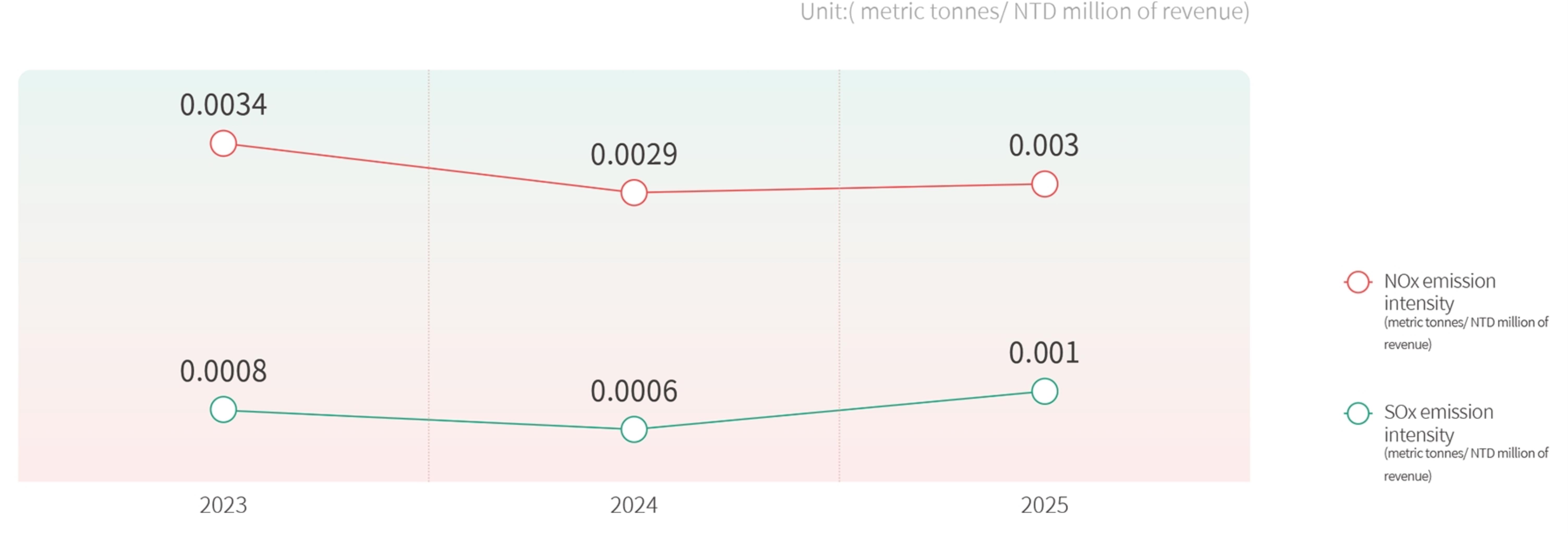
standards set by the Ministry of Environment. In 2025, the NOx and SOx emission
intensities increase by 3.45% and 66.67 % respectively compared to 2024, the
main reason for the increased SOx and NOx emissions is the increased sugarcane
volume and processing capacity at the Huwei Sugar Refinery of the Sugar
Business Division and the increased processing capacity at the Shanhua Sugar
Refinery.The air pollution control situation is shown as follows, and the
emission concentrations are in compliance with regulatory standards.