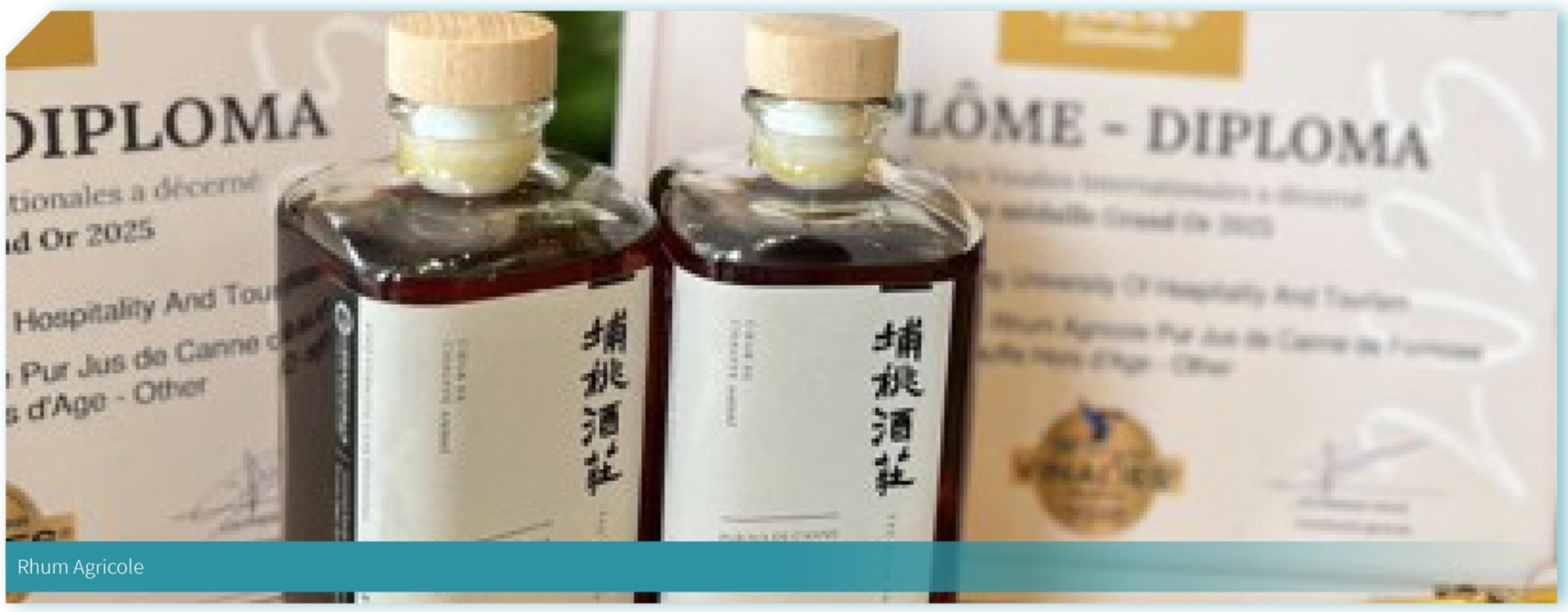
Since 2022, TSC has collaborated with professors from National Kaohsiung University of Hospitality and Tourism and utilized traceable sugarcane from TSC as the raw material to brew an Rhum Agricole rich in Taiwan’s terroir memory. It made its international debut at the end of 2023 and won a silver medal at the Concours Mondial de Bruxelles. In 2025, we used Rhum Agricole aged with Rhum Agricole distillate and barrel-aged gold medal-winning wine, which won the Grand Gold Award at the world’s oldest liquor competition, Vinalies Internationales. This shows that TSC’s ROC24 sugarcane is of excellent quality and has the conditions to brew world-class rum.
TSC hopes to eventually enter the premium rum market and strengthen the closed-loop structure of the circular economy through high-value sugarcane end products, which further drives the sustainable transformation of Taiwan’s agricultural production.
Promote the upgrading of the sugarcane industry
With
changing times, our sugar manufacturing operations have become less profitable.
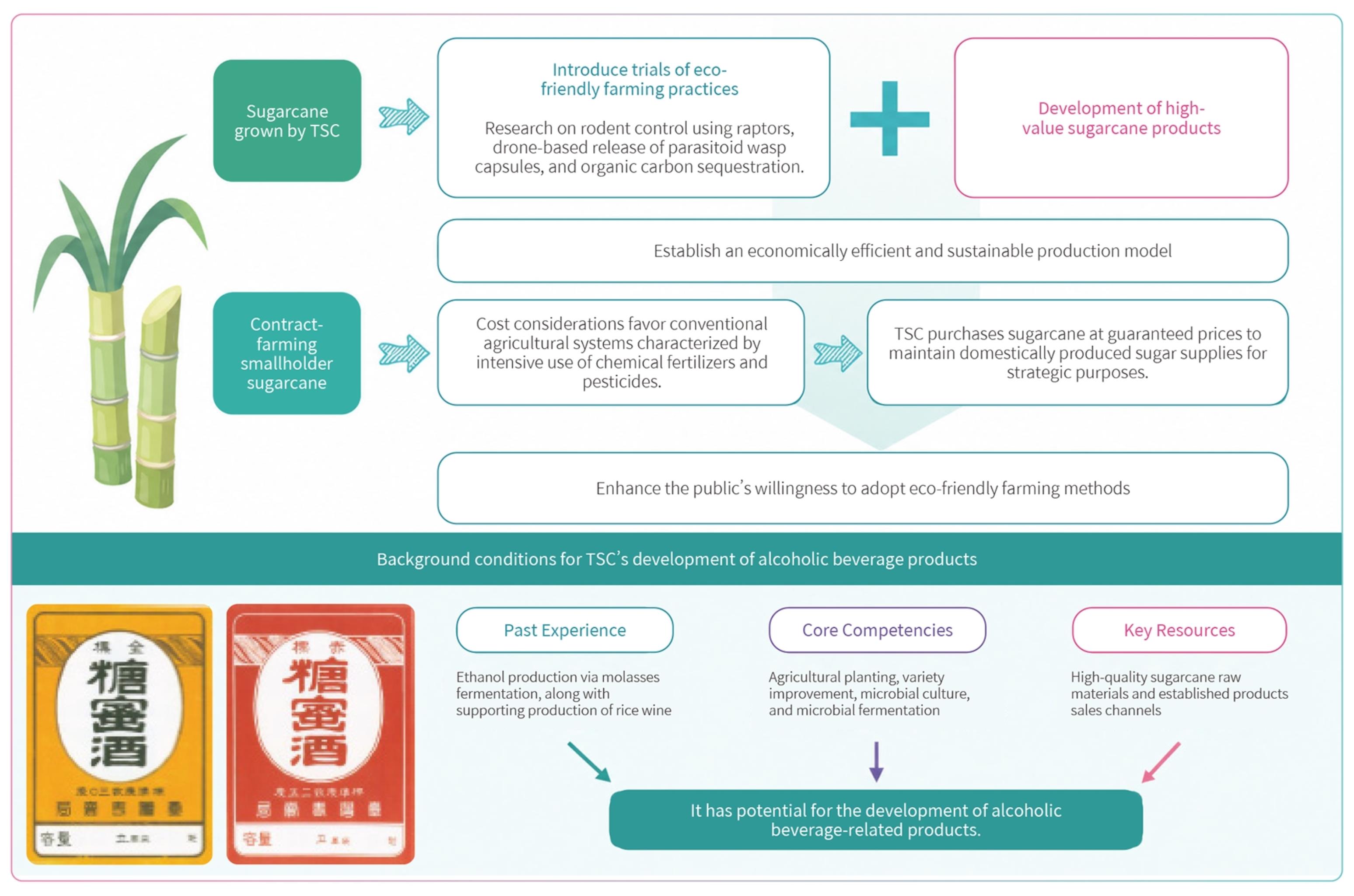
However, in alignment with government policy, TSC continues to purchase
sugarcane from contract farmers at guaranteed prices and maintain a minimum
domestic production level to ensure the security of sugar supply as a strategic
commodity. In addition, to maintain profits, traditional farming methods tend
to use large amounts of chemical fertilizers and pesticides to increase yields
and reduce the risk of pests and diseases. This production model not only
places pressure on soil and ecosystems but also diverges from the global trends
toward sustainable agriculture. Farmers will only invest in the costs, labor,
and time required for transition to eco-friendly farming practices when the
economic benefits are clearly demonstrated.
To
implement sustainable agricultural practices and enhance the value-added
utilization of sugarcane, the Company has actively invested in the R&D of
sugarcane-related products, aiming at the promotion of low-carbon farming
methods through business model transition. TSC has long-standing experience in
producing ethanol through molasses fermentation and in supporting the
production of rice wine, and Taiwan Sugar Research Institute (TSRI) has also
been engaged in alcohol fermentation research for a long time. With existing
sales channels, TSC has the foundation to develop alcoholic beverage products.
In 2021, TSC carried out a study on “Rum aging conditions and spirit
fingerprint profiling”, marking the beginning of its
R&D of alcoholic beverage products. In 2022, TSC further collaborated with
National Kaohsiung University of Hospitality and Tourism to introduce
professional brewing techniques and sensory evaluation. Analysis of the
fermentation performance, yeast strains, distillation methods, and aging
flavors of different sugarcane varieties was made, and suggestions were given
for the development of agronomic rum and sugarcane sweet wine and small-scale
trials were carried out.
Promoting local revitalization through local wine culture
In addition to commissioning National Kaohsiung University of Hospitality and Tourism to research the development direction of sugarcane wine, the Taiwan Sugar Research Institute (TSRI) also conducted research on rum and light spirits from 2022 to 2024. Using raw materials such as fresh sugarcane juice, crude juice, concentrated syrup, and molasses, the research involved fermentation, tasting, strain screening, process stability testing, and oak barrel aging flavor testing, which served as the foundation for subsequent product development and the selection of high-quality rum raw materials.
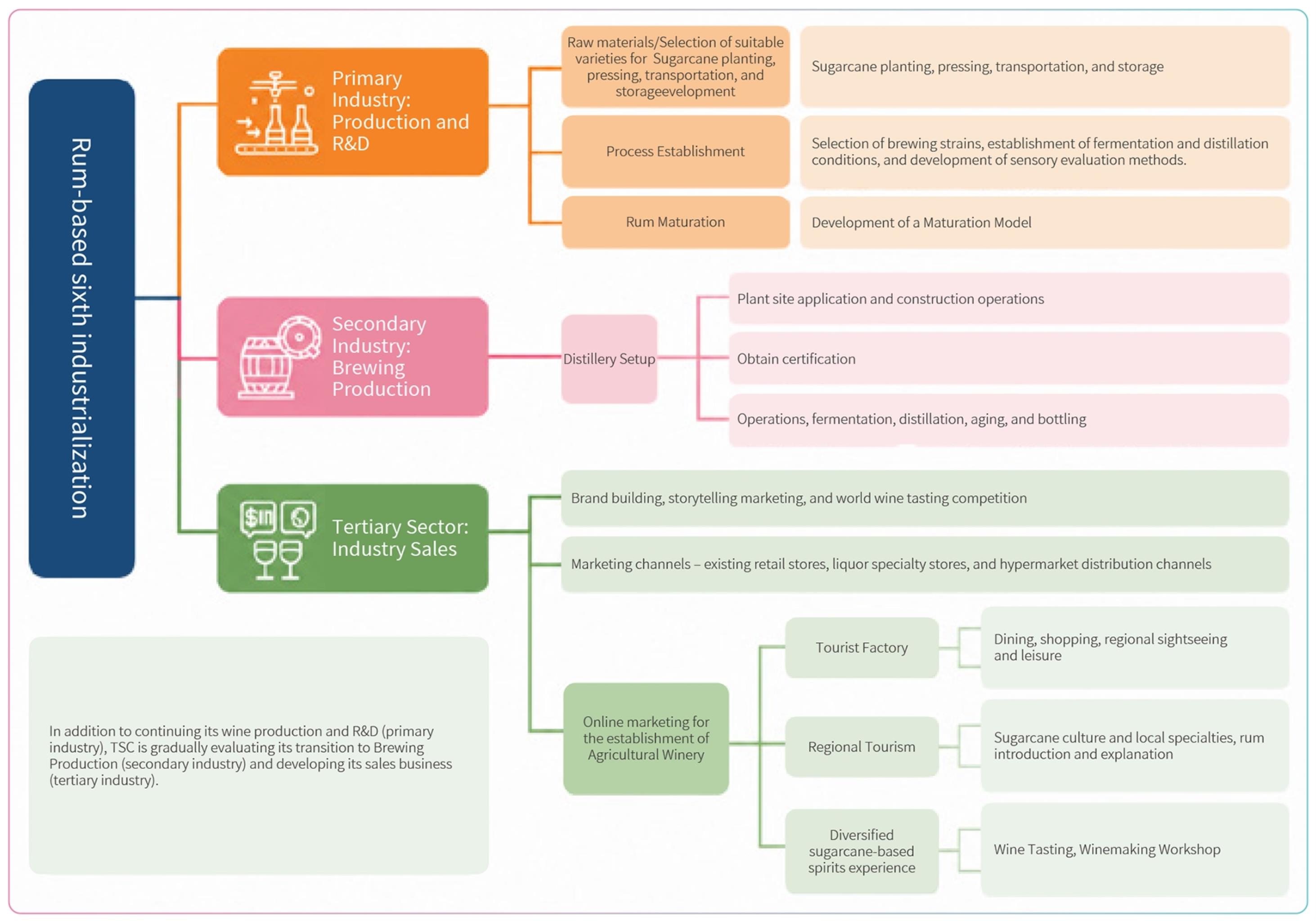
To promote the mass production of rum, TSC made assessment and planned to establish a TSC Rhum Agricole juicing facility in Dalin in 2025. This facility will incorporate an integrated automated system for harvesting, washing, peeling, juicing, and storage and transportation. It was also planned to convert 40 hectares of sugarcane farmland into a Rhum Agricole cultivation area, combining rational fertilization and ecological farming methods to enhance the flavor, quality stability, and origin identification of the rum. The bagasse after pressing can also be used to produce dietary fiber, thus realizing the whole-sugarcane utilization.
In addition, although rum brewed with concentrated sugar syrup is different from Rhum Agricole, it still possesses a unique flavor and the potential to develop into a premium local spirit. In the long term, TSC aims to create a local sugarcane liquor industry with distinctive Taiwanese characteristics, combining agricultural transformation, leisure and tourism, and winery tourism to drive the development of local industries and community culture.