As a state-owned enterprise, the business
model of TSC is characterized by its contributions to the country and society,
its ability to address areas where private-sector involvement is insufficient
or unfeasible, and allowing the enterprise to generate reasonable profit.
Therefore, in response to Taiwan's "net-zero emissions by 2050" goal,
it has collaborated with external academic research institutions on carbon
capture and reuse technology, the goal is to identify technological pathways
with scalable and commercial potential, while also aligning with the nation's
key strategy for net-zero transformation and natural carbon sequestration, to
help promote the implementation of forest carbon sequestration (green carbon)
and soil carbon sequestration (yellow carbon).
Promote the development of natural carbon sequestration
As a major agricultural enterprise in
Taiwan, Taiwan Sugar Corporation actively utilizes land and agricultural
resources to promote the development of natural carbon sequestration. However,
related projects still need to be based on scientifically grounded
methodologies. As of the end of 2025, Taiwan has six natural carbon
sequestration methodologies, including afforestation, enhanced forest
management, bamboo forest management, improved agricultural soil management,
seagrass restoration, and mangrove reforestation.
As conditions for promoting natural carbon
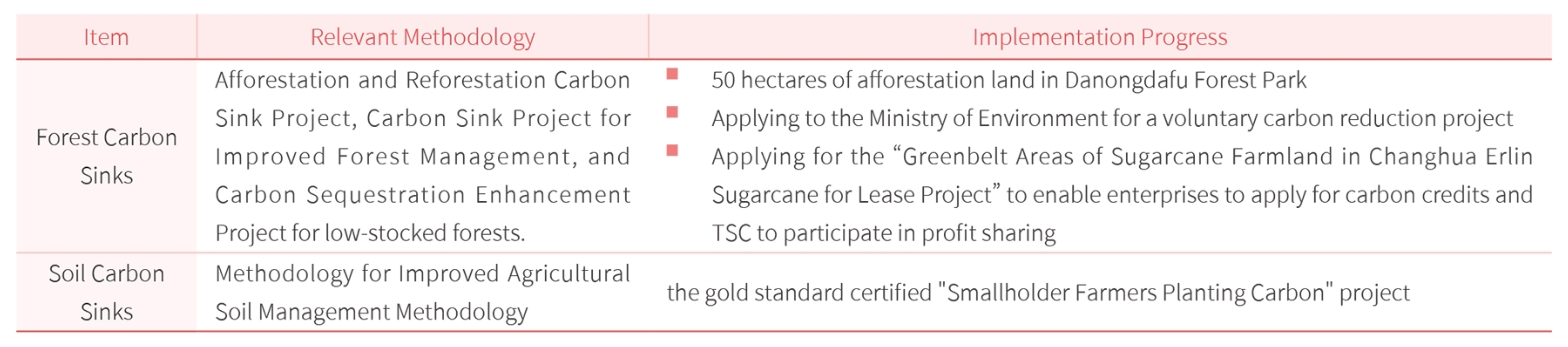
sequestration gradually mature, the Company has begun developing forest carbon
sequestration. In cooperation with the Hualien Branch of Forestry and Nature
Conservation Agency, Ministry of Agriculture, we plan to apply to the Ministry
of Environment for a voluntary carbon reduction project using 50 hectares of
afforestation land in Danongdafu Forest Park. Referring to the example of
corporate afforestation by the National Property Administration, TSC plans to
publicly lease 20 hectares of irregular sugarcane land in Erlin Township,
Changhua County, to provide enterprises with opportunities to invest in
afforestation and enhance the benefits of forest carbon sequestration.
In terms of yellow carbon (soil carbon
sequestration), the Company has a solid foundation in agricultural operation,
land resources, and circular utilization conditions. Sugarcane, a highly
efficient C4 carbon-fixing crop, is cultivated on approximately 10,000 hectares
(including contract farming areas), showing strong potential for soil carbon
sequestration development. In response to the international "4/1000
Initiative" and the promotion of "Carbon Farming", the Company
has registered approximately 270 hectares of farmland with 300 smallholder
farmers. In 2023, we partnered with the Green Consumers Foundation and
Eco-affinity Inc. to join the Smallholder Carbon Farming Project under the Gold
Standard for the Global Goals. Moving forward, we will also follow the
methodology of "Improving Agricultural Soil Management", evaluating
and implementing technologies such as stable organic materials, livestock
manure recycling, and carbon-fixing microorganisms to increase soil organic
matter content and reduce carbon loss. This will serve as the basis for
subsequent applications to the Ministry of Environmental Protection's voluntary
carbon reduction program and for securing carbon reduction quotas.
Promote the improvement of verification mechanisms
Currently, basic scientific data on soil carbon sequestration in
Taiwan still needs to be supplemented. While the relevant measurement
methodologies were announced in March 2025, no verification agency has yet been
established. TSC is taking the lead by joining Taiwan's first international
soil carbon sequestration project – the "Smallholder Carbon Farming
Project". We have also signed a project development contract with
Eco-affinity Inc., contributing 2 hectares of sugarcane land from our Liuying
Farm to the Smallholder Carbon Farming Project. This will involve increasing
the use of organic fertilizers such as "filter cake (press mud)", a
byproduct of sugar production, halving the use of chemical fertilizers, and at
the same time, improving soil fertility and organic carbon storage, and it will
also make Taiwan Sugar Corporation the only company that currently increases
soil carbon sinks through sugarcane planting.
In recent years,
the carbon credit market has faced growing criticism due to allegations of
greenwashing, attracting close attention from international NGOs, investigative
organizations, and the media. Furthermore, as soil organic carbon methodologies
undergo their first international certification, and with the Gold Standard
revising its certification rules several times during the past two years, the
certification process has become more challenging, time-consuming, and costly.
Therefore, although the Taiwan Smallholder Carbon Farming Project has been
established for three years, project design validation did not begin until
2025. The first year of project performance verification is expected to take
place in 2026, after which carbon credits and SDG performance will be issued by
the Gold Standard.
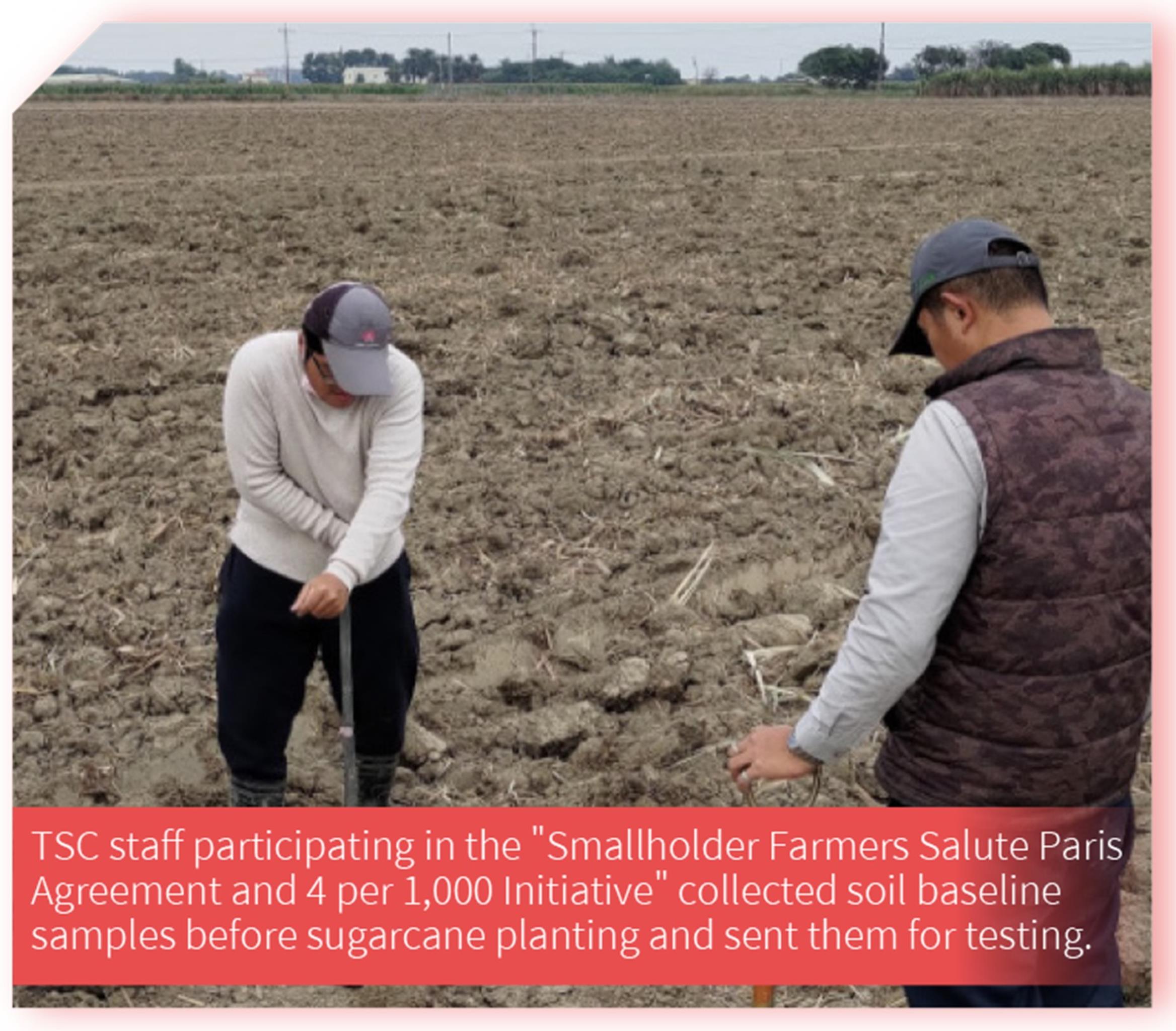
The 2-hectare sugarcane field at TSC’s
Liuying Farm was harvested in January 2025. Soil samples were taken by
Eco-affinity Inc. and sent to the Environmental Laboratory of Department of
Public Health, Tzu Chi University for soil organic carbon analysis. The results
will be released after international verification. Once verified, in addition
to being certified under the Gold Standard, our related products can generate
internationally recognized carbon credits, further promoting TSC's net-zero
transition.
Carbon Capture and Utilization (CCU)
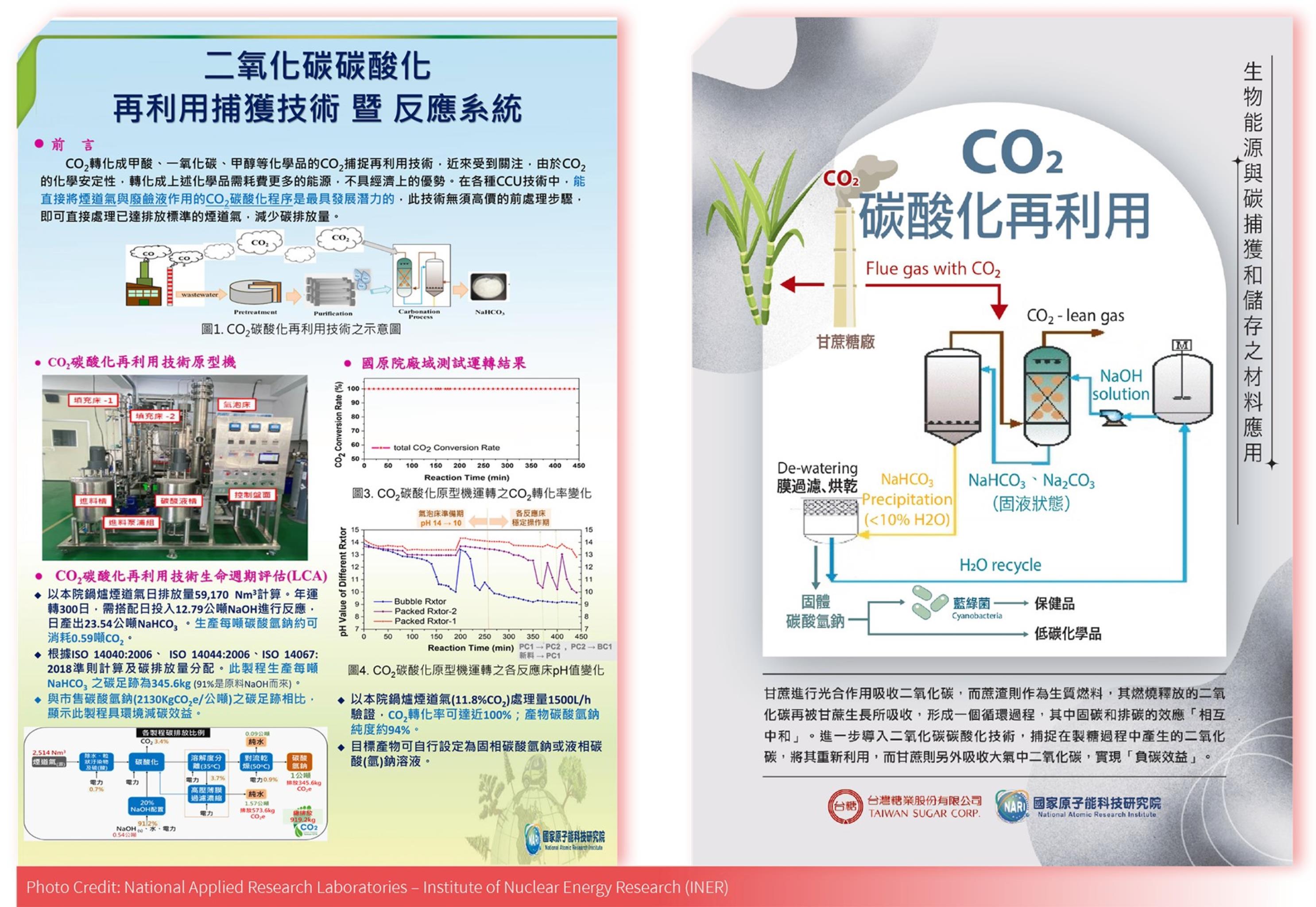
In 2024, Shanhua Sugar Factory cooperated with the
Department of Chemical Engineering of the National Atomic Research Institute
(NARI) to use the "CO2 Capture Pilot Equipment" during the
sugar production period to conduct field tests of bagasse biomass boiler flue
gas carbon capture (BECCUS). The flue gas can be directly reacted with alkaline
solution to absorb the CO2 in it through carbonation, and sodium
bicarbonate is generated at the same time, which is then provided for people's
livelihood and industrial use. This technology does not require complicated and
expensive pre-treatment steps and equipment, and can directly process flue gas
that has met emission standards. It is a CO2 capture process at room
temperature and pressure, making it extremely cost- and economically
competitive.
|
Carbon Capture and Utilization (CCU) |
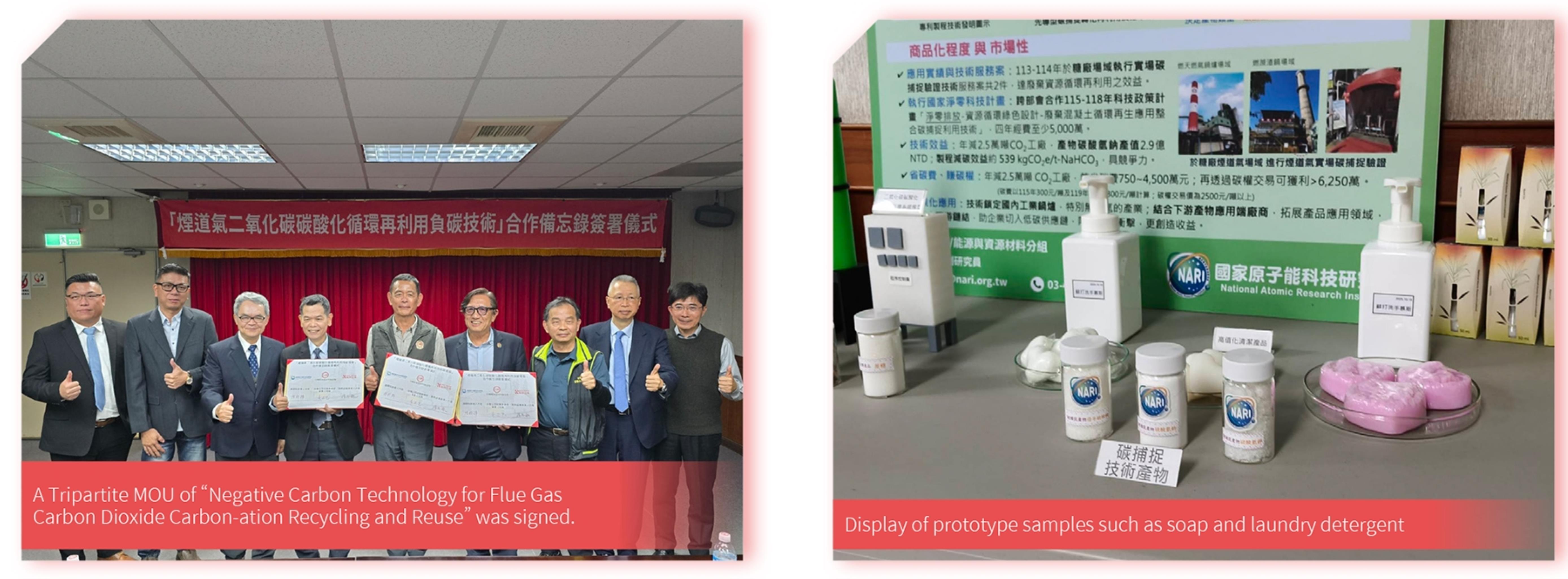
In 2025, we continued to upgrade our
cooperation, signing a tripartite MOU with the National Atomic Research
Institute (NARI) and Nice Enterprise Co., Ltd. During the 2025/2026 sugar
production season at the Huwei Sugar Refinery, NARI provided its independently
developed carbon capture equipment and technology to capture carbon dioxide
emitted from the factory's chimneys and convert it into baking soda. This
baking soda will then be processed by Nice Enterprise Co., Ltd. into
eco-friendly cleaning products such as soap and laundry detergent. This
initiative embodies the concept of "turning carbon from waste into
valuable resources" and demonstrates our commitment to sustainable
stewardship of the land, the environment, and future generations.