Located
in Liouying District, Tainan City, Jianshanpi was originally a reservoir
supplying water for sugar production at the Xinying Sugar Factory before its
closure. In 2023, it was transformed into a tourist resort, which boasts
abundant natural landscapes of low mountains and ponds. In 2017, it obtained
approval as an environmental education facility and continues to promote
ecological restoration through natural recycling and artificial management
methods, resulting in a more diverse ecological environment within the park.
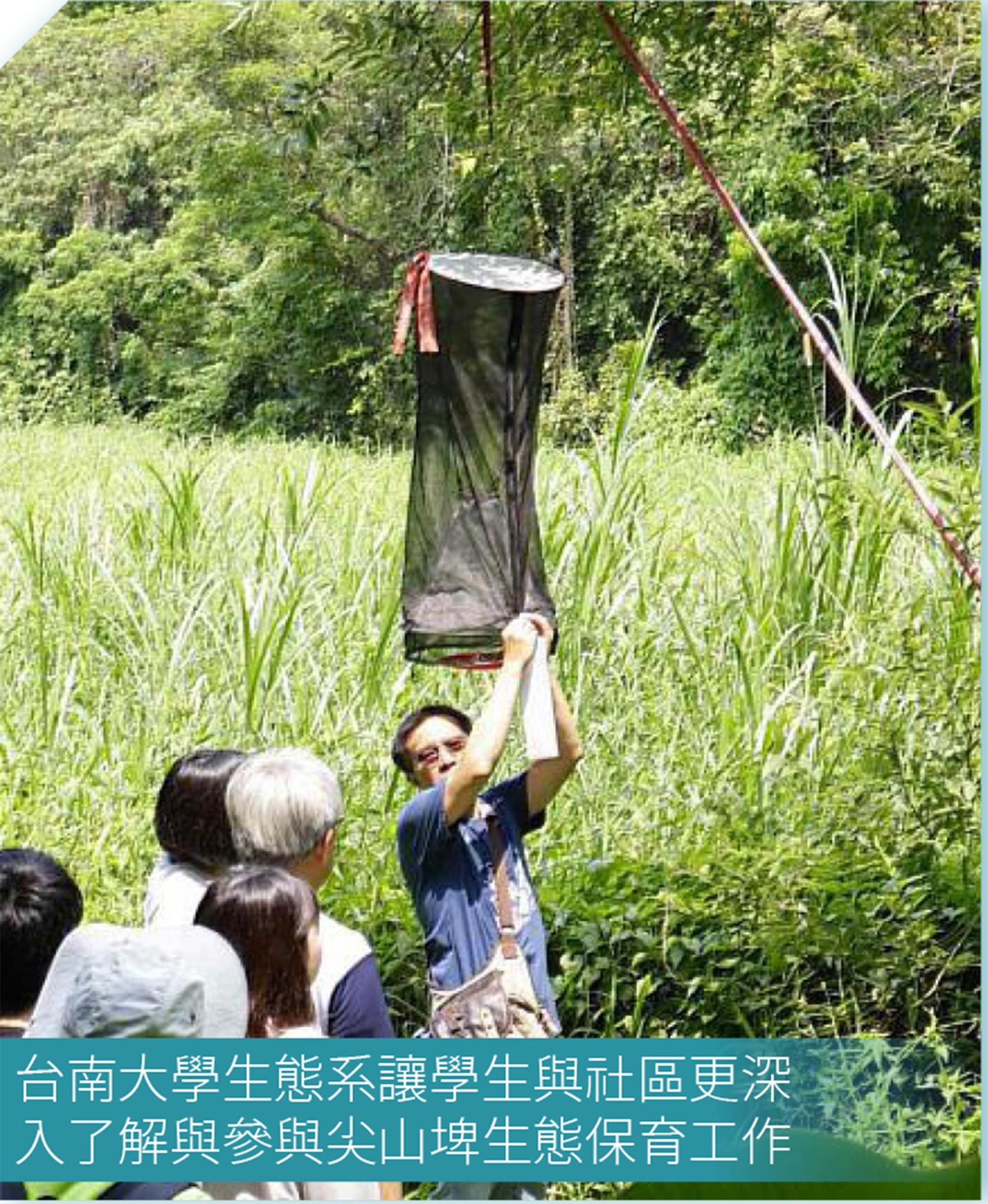
In 2025, in
response to the call from the Department of Ecology and Environmental
Resources, National University of Tainan, Jianshanpi Resort partnered with
Sinshan Elementary School to establish the "Jianshanpi Environmental
Education Alliance". This alliance integrates resources from all three
parties, utilizing scientific ecological surveys to provide foundational data
to support education and research. This year, National University of Tainan's
summer ecological survey recorded several indicative and conservation-value
species, including mammals, birds, amphibians, reptiles, and arthropods. Moving
forward, we will continue to collaborate, using surveys and educational
outreach to deepen public understanding and awareness of local ecology,
ensuring that biodiversity conservation extends beyond academia and becomes a
shared responsibility for all.
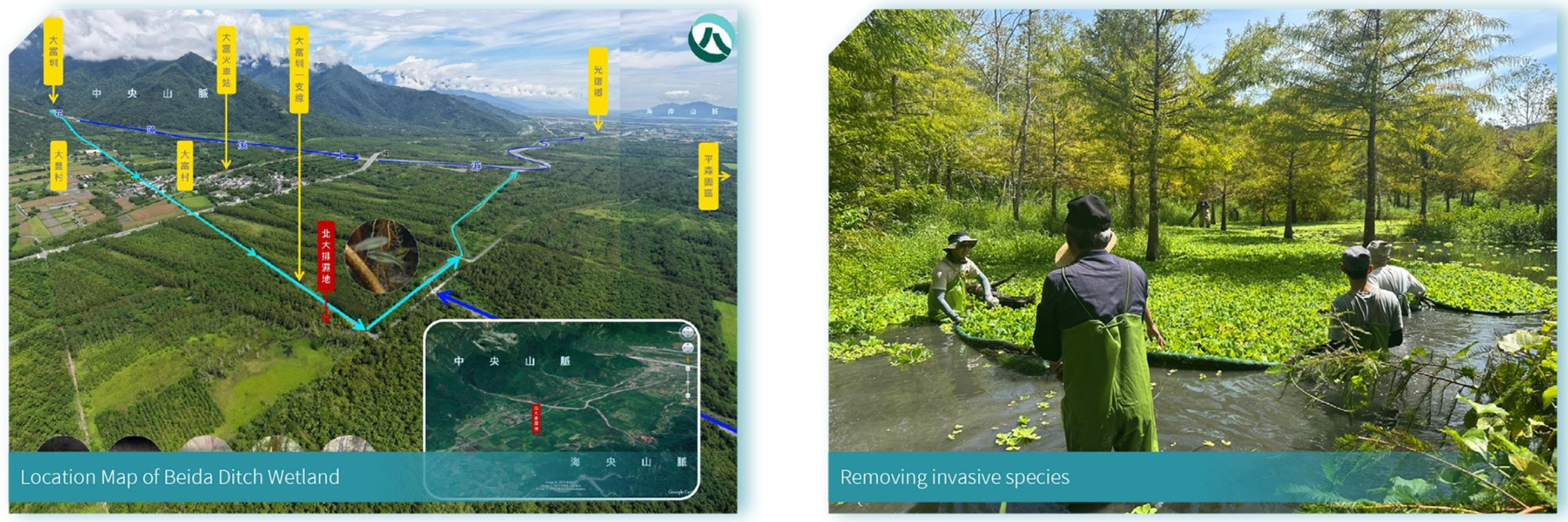
Furthermore,
TSC's Danongdafu Forest Park boasts 1,250 hectares of afforestation on flat
land, making it a rare case of large-scale ecological corridor internationally.
It connects the Central Mountain Range and the Coastal Range ecosystems. It is
adjacent to Beidapai Wetland, a conservation base for the IUCN Red List of
Threatened Species – Taiwan Venus fish. Therefore,
Taiwan Sugar Corporation's Huatung Operation Branch responded to the call of
the Hualien Branch of Forestry and Nature Conservation Agency in September 2025
by participating in the "Invasive Alien Species Removal Workshop" at
Beidapai Wetland with representatives from academia, the public sector, NGOs,
and local communities. The workshop aimed to discuss the threats and control strategies
of invasive alien species and establish a long-term, stable public-private
partnership model.